
It’s possible to visit Seville on a shoestring budget, but if you do a little research, you can even explore the city in depth for free with all kinds of activities.
A city rich in many ways—not only in terms of cuisine and landmarks but also culturally—it’s well worth exploring all it has to offer. So, to help you make the most of your experience, we’ve put together a list of free activities in Seville.
Seville Cathedral and the Giralda

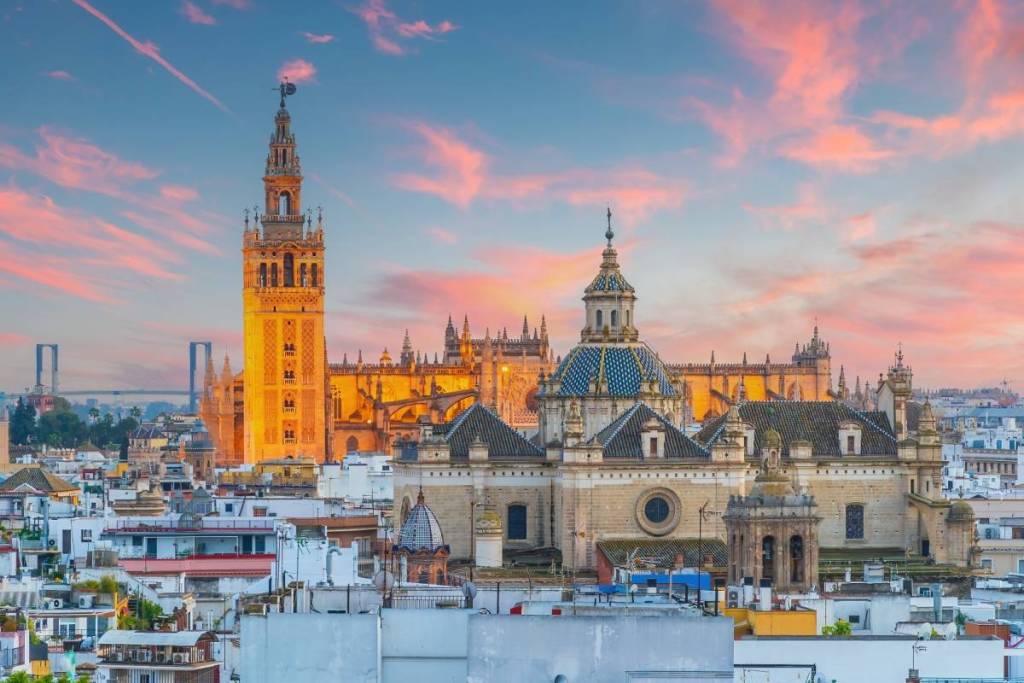
The Giralda and Seville Cathedral—the world’s largest Gothic cathedral and one of the city’s most visited attractions—can be explored completely free of charge.
On Sundays (except holidays), free admission is available from 4:30 p.m. to 6:00 p.m. with an online reservation.
Additionally,natural- s or residents of the Archdiocese of Seville (that is, the capital and the province) can also enter the monument for free.
And for a fee—though it’s one of the most unique experiences you can have in the city—is the guided tour of its rooftops.
Cheers for the Cathedral

Don’t have enough time to visit the inside of the Cathedral? Take a look at its “vítores”— the graffiti of yesteryear.
On the cathedral’s façade, you can see numbers, letters, and symbols that look as if they were taken from the languages of Middle-earth.
Alfonso Jiménez, Rosa Domínguez Caballero, and Juan Luis Barón Cano, professors in the Department of Architectural Construction at the University of Seville ( ), carried out the cleaning and restoration work on the exterior of the Cathedral of Santa María de la Sede.
Following this process, inscriptions came to light that caught the attention of both tourists and Sevillians alike—inscriptions that are nothing more than ways for students to celebrate their success upon completing their academic studies.
Real Alcázar
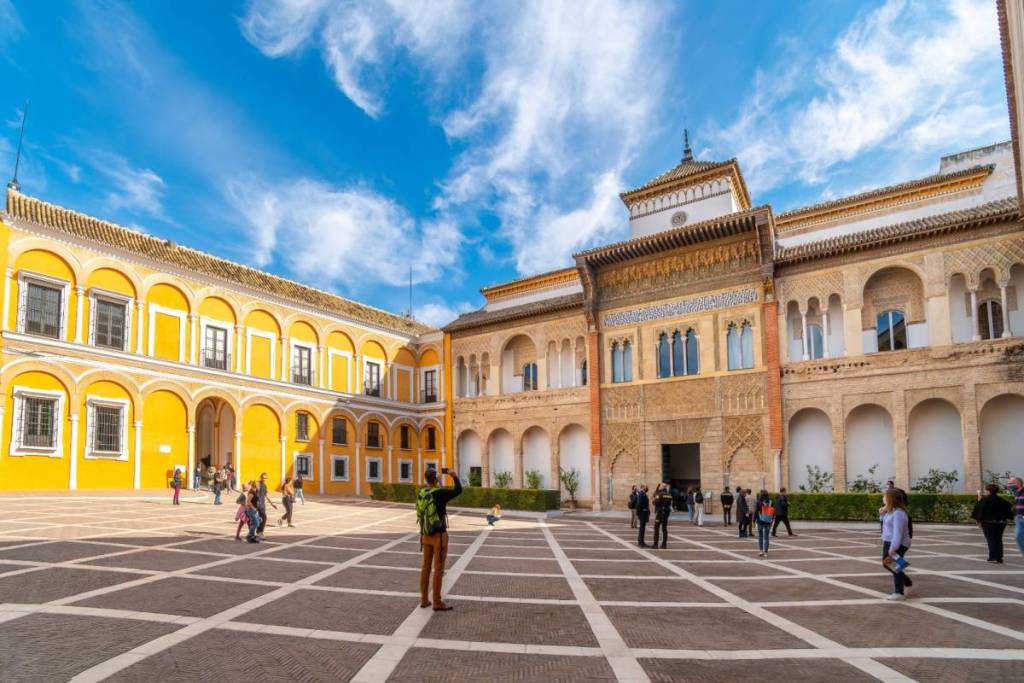
The Real Alcázar can be explored for free on Mondays for a limited time. However, you must reserve your ticket in advance (it tends to fill up quickly), and the online reservation carries an additional fee of €1.
Another unique way to explore—at least the gardens—is through the “Noches del Alcázar” (Alcázar Nights) and their concerts for 7 € through mid-September, or the dramatized tours at dusk.

Founded in 1785 by Charles III, the General Archive of the Indies in Seville isone of the city’smost iconic buildings.
Its walls hold centuries of history, as it was the only place that housed all documentation related to the Spanish colonies until recently.

From the Glorieta de Bécquer to Monte Gurugú, the Isleta de los Pájaros, or Plaza América, María Luisa Park is, without a doubt, the most beautiful green space in all of Seville.
It’s a gathering spot for runners, tourists, and locals alike, who drop by to enjoy its popular Sunday market and grassy areas.

Aníbal González masterfully designed this Sevillian landmark, which anyone can visit for free. Strolling through its majestic halls, admiring its tiles, the ceramic benches dedicated to Spain’s provinces, or marveling at the Mudejar coffered ceiling above the galleries won’t cost you a single cent.
Torre del Oro
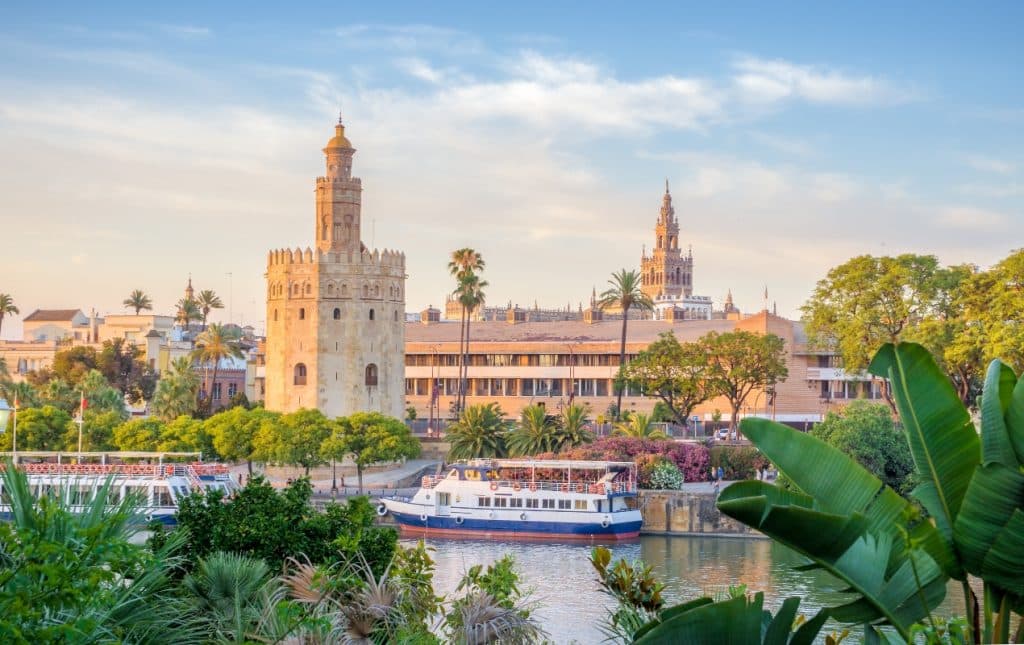
The Torre del Oro offers free admission every Monday; its hours are from 9:30 a.m. to 7:00 p.m. (last admission at 6:30 p.m.).
Inside, it houses two floors dedicated to the city’s Naval Museum and the upper panoramic terrace. On other days, admission is €3.

Residents and those born in the city of Seville can visit City Hall for free.
Highlights include its Renaissance staircase, designed by Hernán Ruiz II, the Chapter House, the Plenary Hall, and the Colón Hall. These richly decorated rooms feature paintings by artists of the caliber of Valdés Leal.
Metropol Parasol

Metropol Parasol, popularly known as Las Setas, also offers free admission to Seville residents or those born in the city.
Children 5 and under, people with a physical disability of 65% or more (including their companion), and tour guides will also enjoy free admission .

Palacio de las Dueñas was the primary residence of theDuchess of Alba and also the place where Antonio Machado was born.
Over time, it became closely associated with the House of Alba, and its halls welcomed figures such as Cole Porter and Grace Kelly. This blend of aristocracy, literature, and social life explains why it is one of the city’s most famous palaces.
Free tours are available on Monday afternoons, from 4:00 p.m. to 7:00 p.m. Children 6 and under are admitted free of charge at any time.

Casa de Pilatos, built in the late 15th century at the initiative of Pedro Enríquez de Quiñones and Catalina de Ribera, is one of the finest examples of the eclectic mix of styles so characteristic of Seville.
Here, the Italian Renaissance and the Mudejar art coexist within the same tour, without one overshadowing the other. Among its most striking features are the lower gallery, decorated with 24 busts of Roman and Spanish emperors, and the interior gardens.
Unfortunately, this Sevillian palace only offers free admission on Monday afternoons from 3:00 p.m. to 7:00 p.m., and only for the ground floor. Reservations must be made through the Fundación Medinaceli website, and they tend to sell out quickly.

Built in the 16th century as a stately home, it was transformed in the early 20th century by the Countess of Lebrija, who was passionate about archaeology. It was she who turned the residence into a true private museum, incorporating Roman mosaics and archaeological artifacts that still cover the floors and decorate the rooms today.
On Fridays at 10:00 a.m., there is a free tour if you only want to explore the ground floor.
Convent of Santa Clara

Admission is free to the 16th-century Renaissance cloister, the refectory, the gardens, and the area around the Don Fadrique Tower.
The convent is open Tuesday through Saturday from 10:00 a.m. to 8:00 p.m.; Sundays and holidays from 10:00 a.m. to 2:00 p.m.; closed Mondays.
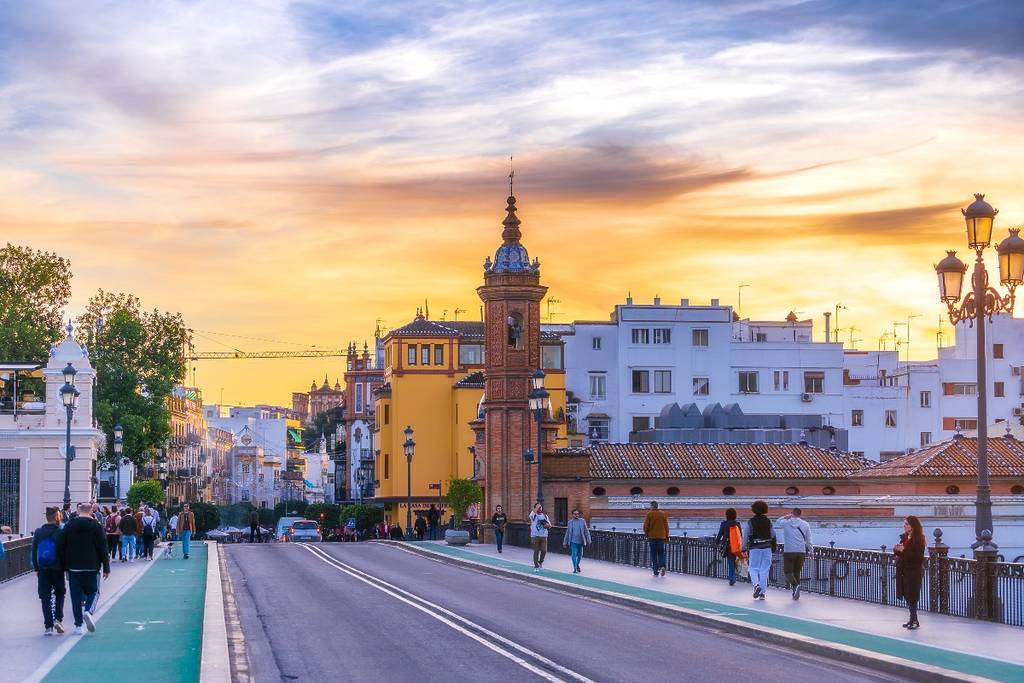
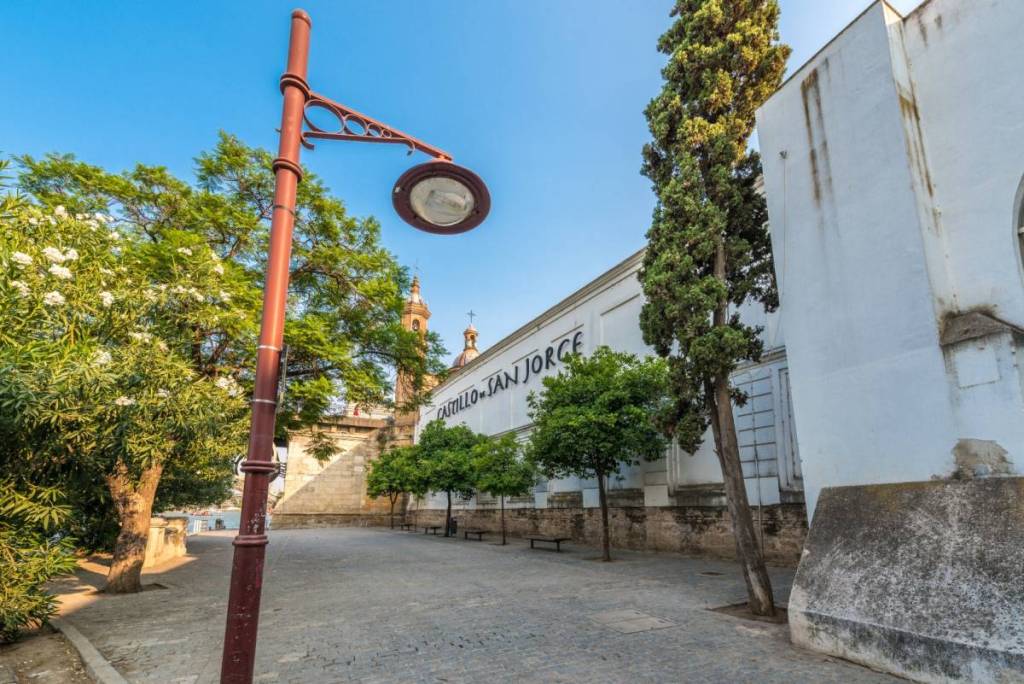
Although it is one of the most important sites in Seville’s history, few people stop to visit San Jorge Castle. Including this stop on a sightseeing itinerary means confronting one of the darkest (yet also most historically significant and far-reaching) periods in the history of Seville.
A Visigothic fortification and the seat of the Spanish Inquisition from 1481 onward , it was demolished centuries later to expand the Plaza del Altozano and create the food market.
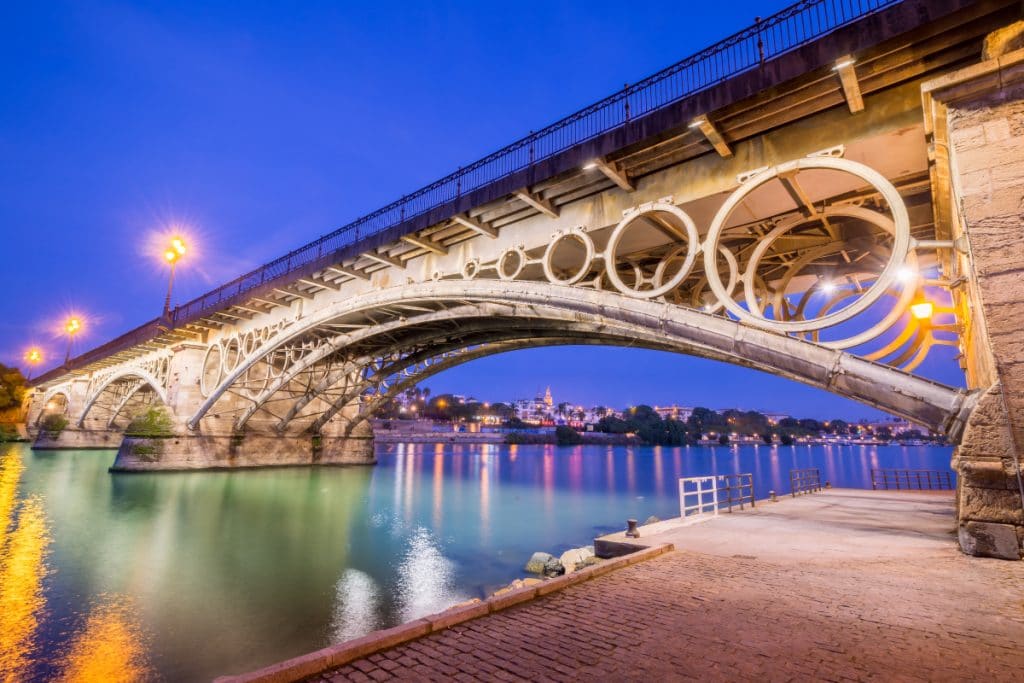
Designated a National Historic Monument on April 13, 1976, the Isabel II Bridge, popularly known as the Triana Bridge, is one of the most iconic landmarks for Sevillians and a must-see for any tourist.
It is the oldest surviving iron bridge in Spain and was designed by the engineers Gustavo Steinacher, and Ferdinand Bernadet. The cast iron components, however, were commissioned to be built at the Bonaplata brothers’ workshop in Seville.
Royal Tobacco Factory

The Royal Tobacco Factory, now the headquarters of the University of Seville, is renowned for its beauty, its history, and its striking resemblance to Hogwarts. It won’t cost you a thing to take a look around its courtyards or some of its iconic classrooms.
Hospital de la Caridad
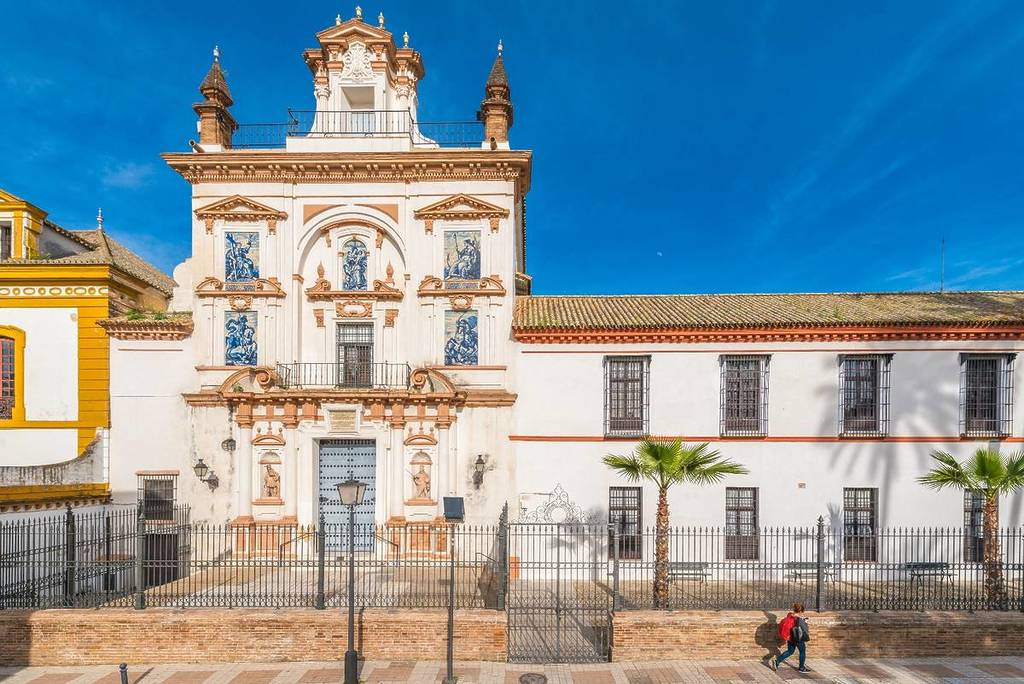
The imposing Baroque church and its iconography, designed by its founder, Miguel de Mañara, reflect on the transience of life and death and are one of Seville’s best-kept secrets.
Admission to the Hospital de la Caridad is free on Sundays from 4:30 p.m. to 6:30 p.m.

Stopping by the Seville Museum of Fine Arts is a true artistic experience for tourists visiting the city, art lovers, and locals eager forthings to do in .
It’s one of Spain’s most important art museums, but visiting it will make your day even more special for many other reasons. The paintings at the Museum of Fine Arts, of course, but also the building itself— the former Convent of La Merced—is exceptionally beautiful.
There are many attractions that invite you to visit the Plaza del Museo, such as the Sunday art market that livens up the mornings in the neighborhood. You won’t be able to resist discovering the best exhibitions in the city. Meanwhile, the classics are always a sure bet. Admission is free for European Union citizens.
Museum of Folk Arts and Traditions

Just like the Museum of Fine Arts, the Museum of Popular Arts and Customs in Seville is free for European Union citizens.
The building that houses this center is a work of art in itself— , aformer pavilion from the 1929 Ibero-American Exposition designedby , and Aníbal González.
Inside, visitors will find everyday objects from the 16th to the 20th centuries, genre paintings, textiles, furniture, and more—a comprehensive exhibition on the social changes of the era and what life was like in both rural and urban areas.
It is closed on Mondays, and its regular hours are Tuesday through Saturday from 9:00 a.m. to 9:00 p.m. and Sundays and holidays until 3:00 p.m.
Triana Ceramics Center

The Triana Ceramics Center began operationsin 2014 as a center forthe reception, interpretation, and organization of visits to the Triana neighborhood. Since then, it has sought to highlight the pottery tradition of this popular Sevillian neighborhood, as well as its spatial, ethnological, and anthropological value.
All the elements that make up the center are displayed in their original context. Thus, the kilns have been restored, and the pathways and interactions among the various trades that coexisted in this space have been preserved.
This site comprises two floors and features a permanent exhibition, a tour of the archaeological remains, a specialized documentation center , as well as a space for interpreting and guiding tourists through the neighborhood’s itineraries.
Its location is no accident either. The CCT is situated on the site of the pottery complex that once served as the headquarters of the historic company Cerámica Santa Ana-Rodríguez Díaz S.L.
Admission is free with a ticket to the Alcázar, as well as for those born in or residing in Seville, children under 16, and people with disabilities.
Hospital de los Venerables and Centro Velázquez

TheVelázquez Center, a museum dedicated to the painter Diego Velázquez, is located in the Hospital de los Venerables, a historic gem in its own right.
Admission is free only for children under 12 and people with disabilities. However, anyone can enjoy this space for free during BIC hours—Mondays from 3:00 PM to 7:00 PM—by making a reservation on their website.
Provincial Archaeological Museum (temporarily closed)

Free for citizens of the European Union.

The Monastery of the Cartuja de Santa María de las Cuevas is home to this well-known museum with a rich heritage. The CAAC is located on Isla de la Cartuja, near the Torre Pelli Shopping Center, and often celebrates art beyond its collection and temporary exhibitions.
Seminars, film screenings, and themed series. So much so that in the summer, it becomes a veritable oasis dedicated to culture. From its summer movie theater, the“ ” and“Pop CAAC” concerts , and its“ ” jazz festival.
The Andalusian Center for Contemporary Art is open to the public Tuesday through Saturday from 11:00 a.m. to 9:00 p.m. and on Sundays and holidays from 10:00 a.m. to 3:30 p.m. The big question, however, is when you can visit this museum in Seville for free: free admission is available Tuesday through Friday from 7:00 PM to 9:00 PM and all day on Saturdays.
In any case, the ticket for the other time slots costs just under 2 euros (1.80 €).
Santa María la Blanca

Its uniqueness and history top this list of favorites alongside San Luis de los Franceses.
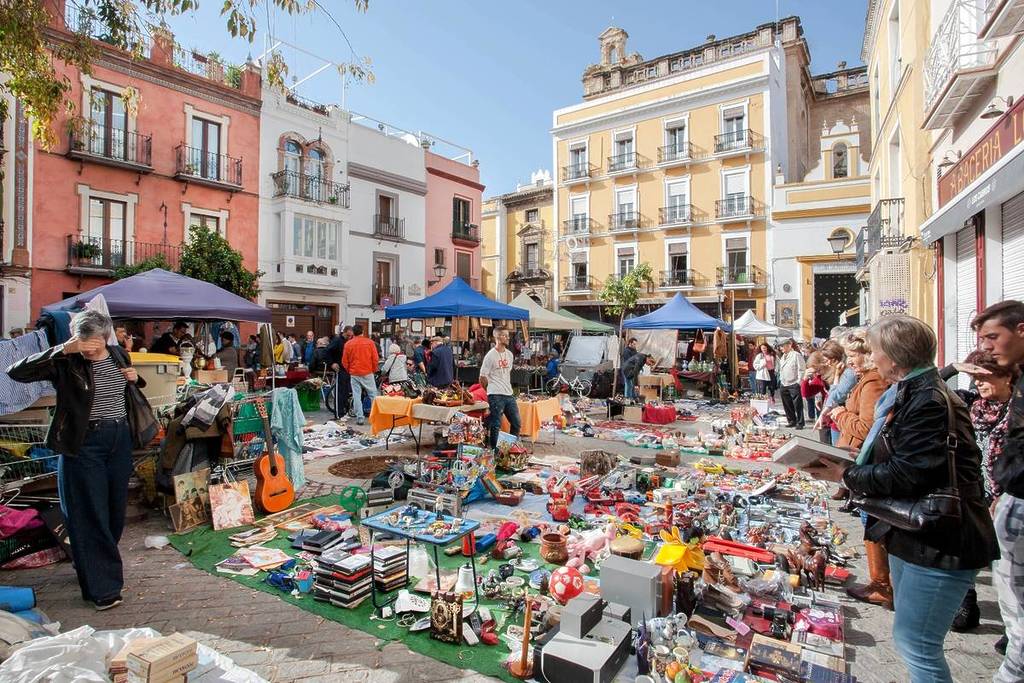
r Calle Feria, with its picturesque shops and vibrant atmosphere, is also home to one of Seville’s most popular street markets. In fact, mentioning “Thursday in Seville” is more of a statement of intent than a specific day of the week. It does, however, take place on that particular day and brings together more than a hundred stalls.
What can you find at “Thursday”? The truth is, almost anything—among the items piled up along this busy street, passersby will find sunglasses, vintage toys, busts, paintings, keychains, collectibles, antiques, coins, books, and more…

The purest neighborhood atmosphere is concentrated in this place. Locals, curious onlookers, tourists, and those in love with Triana gather here every day to explore the stalls selling food, flowers, and ceramics, as well as the diverse culinary offerings from the small businesses housed within.
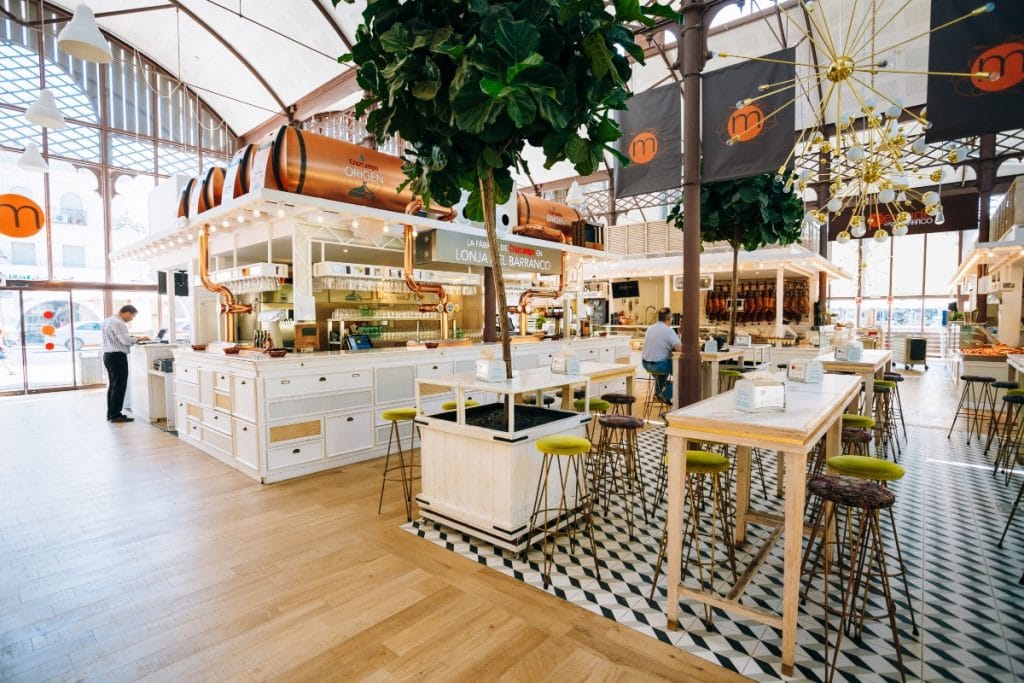
This gastronomic space is a must-visit for food lovers. With a strategic location and undeniable beauty, it features two floors and 20 food and beverage stalls.
The market is as beautiful as it is historic. First, the structure was designed by Gustave Eiffel. Additionally, it served as Lonja and Mercado Mayorista de pescado from 1883 to 1970. It remains the only iron market in Seville to this day.
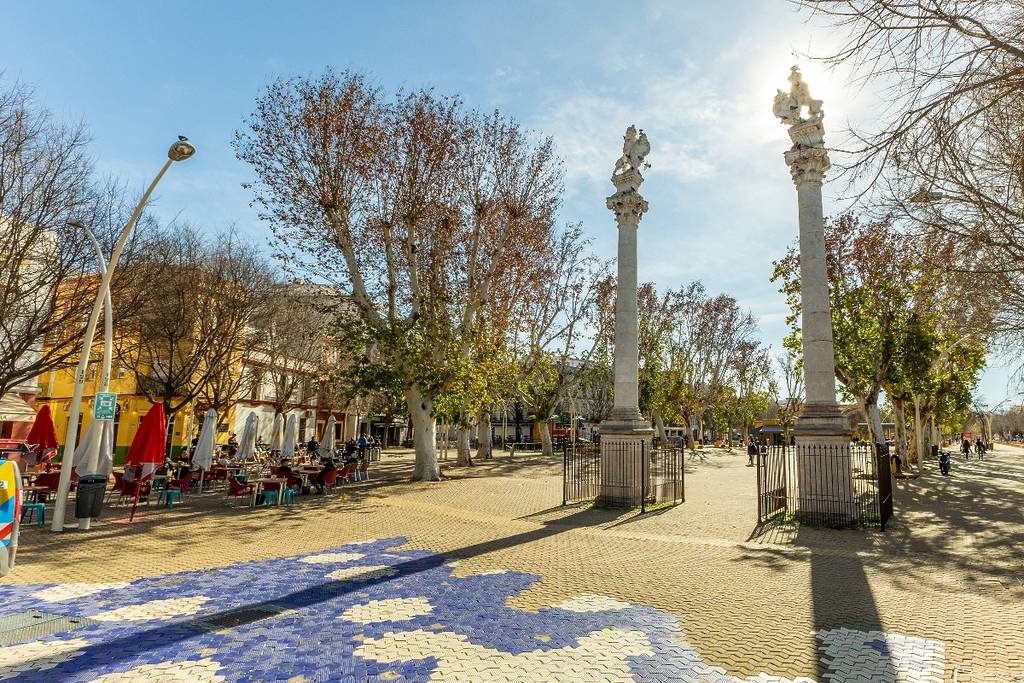
A visit to this lively spot in Seville is a must—and, best of all, it’s free. You can settle into one of its sandy-colored benches and listen to the street musicians or enjoy an afternoon chat. Its bars, however, offer one of the best atmospheres in the city.
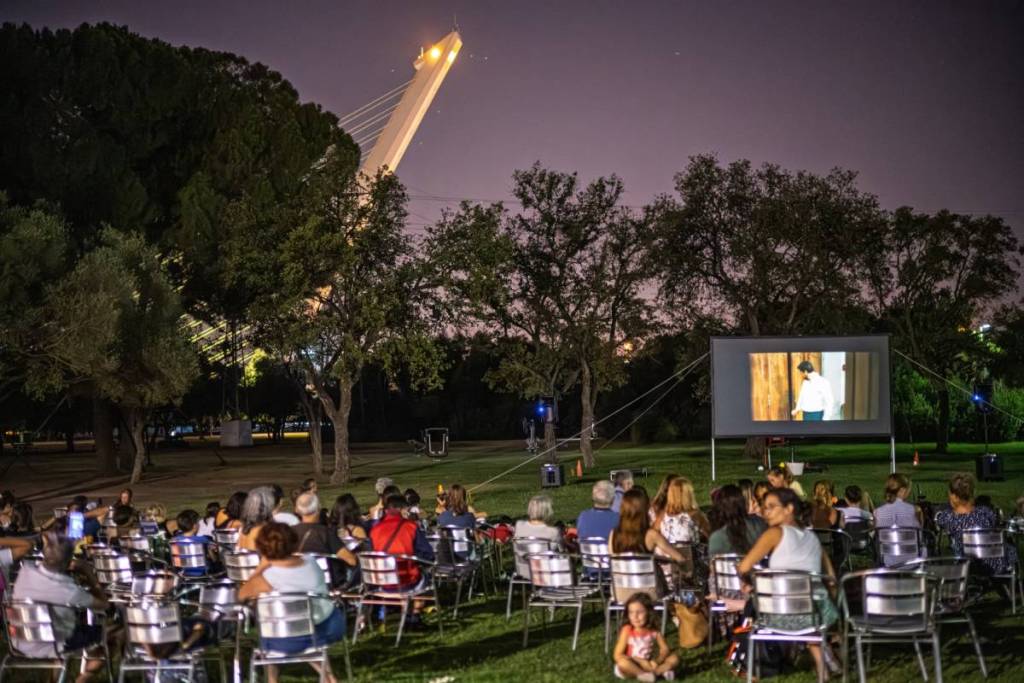
Alamillo Park (and its summer movie theater). Vast expanses of greenery dominate this park on Isla de la Cartuja. Strolling through this green space in Seville is free and one of the most popular weekend activities.

Next to the Torre Sevilla Shopping Center lies this open space that hosts free, popular events such as Electrolunch.
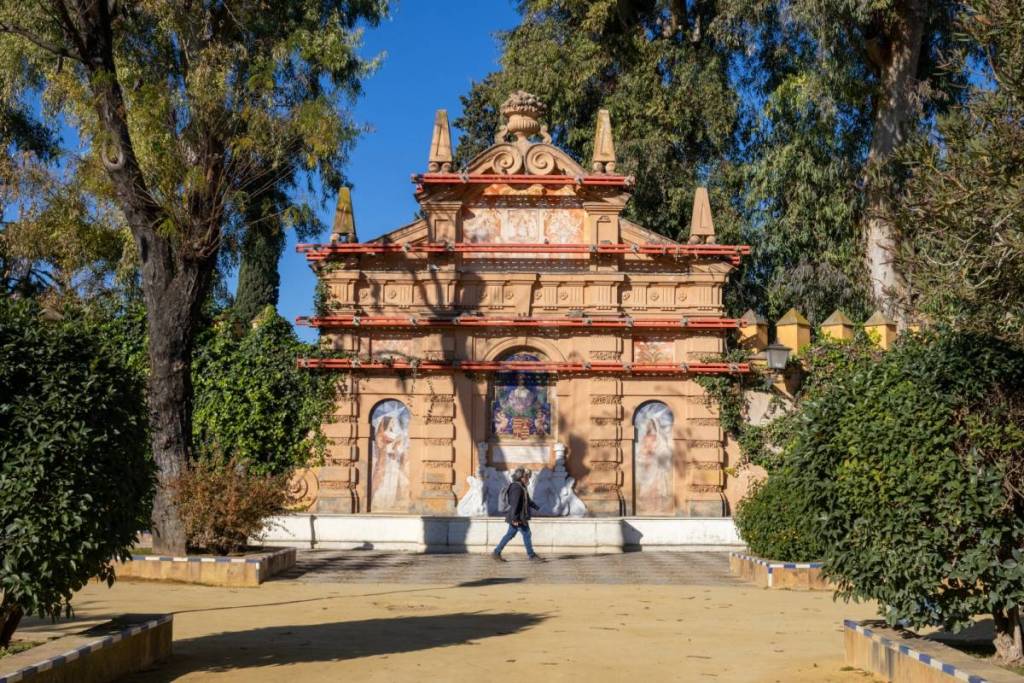
The wall, hidden among flowers and shrubs, separates the gardens of the Real Alcázar from the Paseo de Catalina de Ribera. Incidentally, this promenade is mistakenly known by many Sevillians as the Murillo Gardens.
In reality, the Murillo Gardens are located at the end of the promenade, surrounded by Santa María la Blanca, the Puerta de la Carne, and the Santa Cruz neighborhood.

The Buhaira Gardens and the palace that gives them their name may be overlooked by tourists, but Sevillians should know more than just where to find them on a map.
It’s not hard to admit that this isn’t one of Seville’s most popular tourist spots or one of its must-see landmarks. However, a visit to this part of Seville is completely free and will transport you to a past of Arab splendor that deserves to be discovered.
Making the Most of the Guadalquivir

Take a stroll, go for a run, ride a bike, or munch on some sunflower seeds.
Plaza del Cabildo

Plaza del Cabildo is one of the most beautiful spots in Seville, even though it isn’t listed among the city’s main tourist attractions.
Be sure to stop by at least one Sunday to enjoy its coin and stamp market—a remaining local haven in the heart of the city.

The scent of orange blossoms and the breeze through the narrow streets permeate Seville’s historic center, which preserves its history, heritage, and culinary gems while developing new local projects. Exploring Santa Cruz is a privilege and a gift shared by tourists and Sevillians alike, and this compilation is an ode to the balance and virtues of this neighborhood.
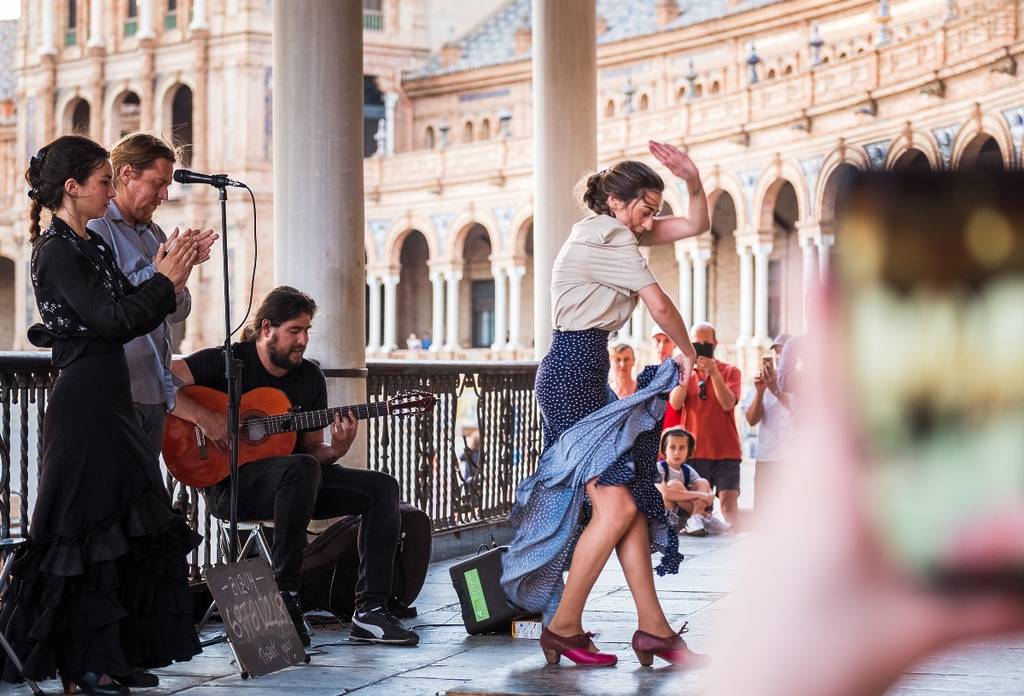
Without a doubt, one of the best free things to do in Seville is to enjoy street music. In any case, if visitors or locals prefer to catch a great show, here are a few perfect spots to listen to flamenco.

Attend any of the cultural events organized by the University of Seville’s Center for Cultural Initiatives (CICUS), ranging from gatherings, screenings, and panel discussions to exhibitions.
Plaza de Santa Marta
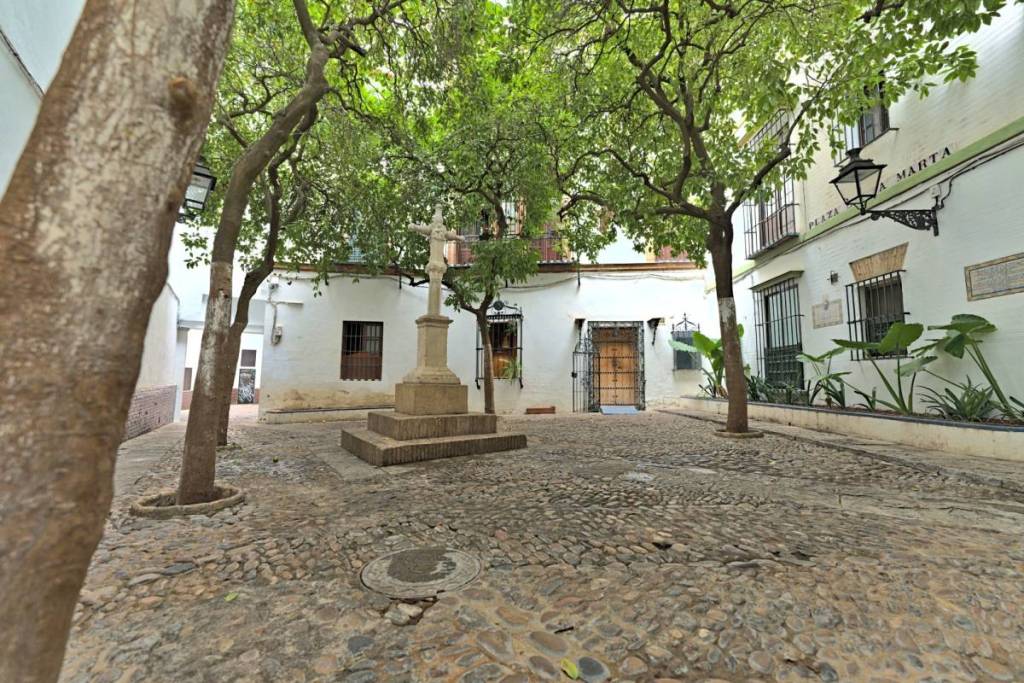
This small square, tucked away in the heart of the historic district, surprises everyone who enters it, as it feels as though time has stood still in this little corner of Seville. It takes its name fromthe now-defunctSanta Marta Hospital ( ).
Before 1980, a Sunday stamp and coin market was held here. One of the three archways in the square leads tothe former Santa Marta Hospital.

Holy Week is one of the major events in Seville and throughout Andalusia , synonymous with the streets, religious brotherhoods, hundreds of activities, outdoor cafes , and seasonal culinary delights that are sure to please.
The processions fill the streets; traditional hand-kissing ceremonies, short getaways, and brotherhood customs will take place as tradition dictates, most of them free of charge.
Our guide will help you organize your ideas and your schedule so you can make the most of spring and Holy Week in Seville without spending any money.
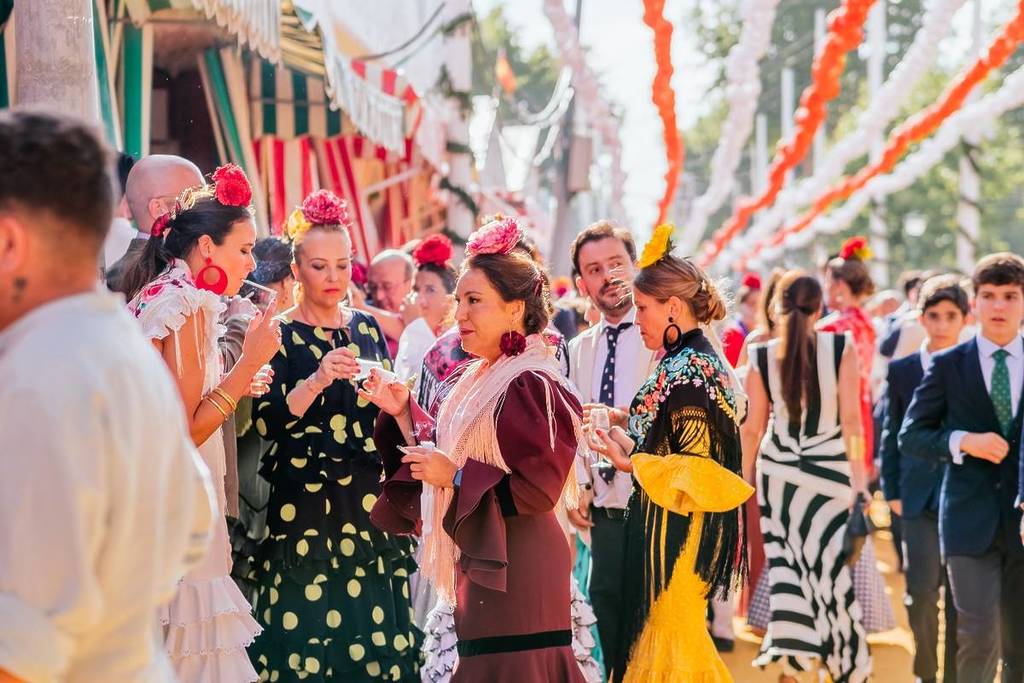
A Festival of International Tourist Interest anda major event for Sevillians, domestic tourists, international visitors, and residents of the province and surrounding areas. An event with enormous economic significance and one of the city’s greatest intangible attractions.
Lanterns, rebujito, the sand-covered arena, sevillanas, and a light display that makes headlines around the world are just some of the elements that make up this big week in the city. And at the very least, you can take a stroll through the “ ” completely free of charge.

The Triana neighborhood, in addition to its charms and tourist attractions, hosts an unmissable summer event: the Velá de Santa Ana.
On this bank of the Guadalquivir River, at the end of July, a wide range of activities takes place, fromthe “ ” to its popular “cucaña” (greased pole), pottery markets, sports competitions, theater performances, and concerts inthe Plaza del Atozano.
Every year, Triana is decked out with lights, lanterns, and festival booths to host this traditional event, whose origins date back to an ancient pilgrimage dedicated to the patron saints Santiago and Santa Ana. It’s a must-see in Triana that you shouldn’t miss if your visit to the city coincides with the event dates.

Discover the best bookstores in Seville —or at least our favorites. They bring together literature, theater, cafés, and even works of art that customers can purchase.
Watch the sunset next to the Torre del Oro
In addition to going up to the terrace of the Torre del Oro and exploring the Naval Museum inside, you simply must wait for sunset in the area at least once in your life. The best spot is to sit by the river on Paseo Alcalde Marqués de Contadero, across from Calle Betis.

Just a few meters from the cathedral, on the iconic Mateos GagoStreet , the —an undisputed gem of Seville—remained hidden for years.
Specifically, this occurred during the renovation carried out by regionalist architect Vicente Traver in the early 20th century to convert the building into a hotel; the 12th-century Almohad hammam remained hidden, preserved, and protected until a few years ago.
Sevillians and visitors alike have the opportunity to explore the restored Arab baths at Bar Giralda, whether by taking a quick peek or enjoying a drink at the bar.
See the Macarena

The headquarters of theHermandad de la Esperanza Macarena ( ) is a must-see for any traveler, as it is home to the Macarena, an image that inspires such deep devotion among the city’s residents.
Designed by Sevillian architect Aurelio Gómez Millán, it was declared a Minor Basilica by a papal bull issued by Pope Paul VI, making it the first church in Seville to hold this distinction.
Palace of the Marquises of La Algaba

This is one of the greatest examples of civil Mudéjar art inthe city. Built in 1474 by Juan de Guzmán, the first Lord of La Algaba, the building has undergone numerous transformations over the centuries. It served as a theater (the well-known Teatro Hércules), a tenement building, and even a summer movie theater, before becoming what it is today: the Mudéjar Art Center of Seville.
Admission is always free during opening hours, Monday through Friday from 10:00 a.m. to 2:00 p.m. It is also open on Saturdays and in the afternoon starting October 1, from 5:00 p.m. to 8:00 p.m.
Seville Military History Museum
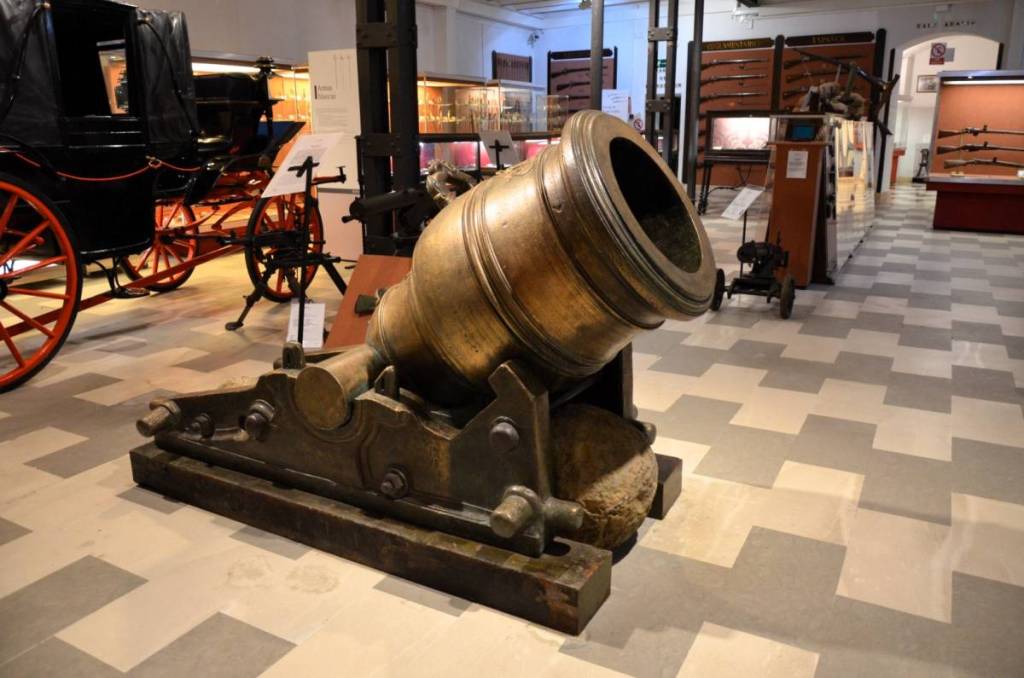
Its origins date back to 1987, when weapons were first exhibited at the former Seville Artillery Workshop (Maestranza de Artillería Sevilla) in an area known as the “model room.” Thismarked the beginning of the museum, and in 1992, the museum we know today— —was inaugurated in Plaza de España, featuring collections from the Maestranza and the Artillery Factory.
Subsequently, items from the former Military Pyrotechnics Department, the apprentice schools, and the former Southern Military Region were added to the collection.
In 2000, the space was renovated and two new floors were added. Recently, items from the Royal Cannon Factory have been added to the collection.
Admission is free, and the museum is open Tuesday through Friday from 9:30 a.m. to 2:00 p.m., and Saturdays and Sundays from 10:00 a.m. to 2:00 p.m.
Church of San Luis de los Franceses

In a city teeming with bars, churches, and sculptures, you might end up thinking that nothing will be able to surprise you. It’s important to remember that unique places like San Luis de los Franceses exist.
This church is one of the finest examples ofBaroque art in Seville and can be visited free of charge on Sunday afternoons.
Torre Sevilla Pop-up Market

A while back, Torre Sevilla joined the growing number of markets in Seville with an event held once a month in its main plaza.
This street market , which is temporary in nature, takes place on the second weekend of each month and brings together about twentybrands specializing in fashion, design, painting, and handmade jewelry, among other offerings.
In addition, it is beginning to incorporate workshops ranging from handmade candle-making and macramé to accessories for flamenco fashion next to the shopping center.
Paseo del Arte
For quite a few years now, the Seville Association of Painters and Other Arts has been organizing one of the city’s liveliest events. The Paseo de la O, in Triana, hosts a weekend celebration of pottery, ceramics, and painting along the Guadalquivir River.
Anyone looking topick up unique pieces at should definitely visit the stalls on the Paseo del Arte, one of the flea markets most cherished by Seville’s residents.