
It’s no secret that when it comes to the sea, few know the origin of seafood as precisely as the Tribeca family. Located in the Nervión neighborhood, this refined restaurant specializing in fresh seafood, led by Pedro Giménez, “knows where each piece was caught, how it was caught, when it came out of the water, and how it was handled on board—and based on that information, decides how to cook it: raw, grilled, pan-seared, fried, sous-vide, or as a seafood sausage.”
Under this banner, this September, the restaurant is unveiling its fall menu.
From the boat to the kitchen, with no middlemen
Five years ago, Tribeca added its own fleet and Astaroth, its fish market in Rota. With these, it controls the entire supply chain and selects the fish at the source. Eduardo Guardiola, Pedro’s brother and a partner in the restaurant, maintains direct contact with the fishing industry. He is familiar with the biological cycles of the species, the seasons, the fishing gear, and the biodiversity of the Gulf of Cádiz.
Sustainability, the restaurant explains, involves respecting each species and its season, as well as ensuring that the fishing trade remains a way of life for future generations.
“We never know what fish will arrive tomorrow. What we do know is where each fish comes from, how it was caught, and what it needs,” explains Giménez.
Each cut has its own technique. Belly meat, neck meat, cheeks, roe, and other cuts rarely seen in restaurants have been part of its dishes for years. Temperature, resting time, cutting, and cooking methods vary depending on the fish. Rigor mortis and resting time also influence the texture, so the preparation of a seemingly simple dish often begins days before service.
What’s on the fall menu
Among the seasonal dishes:
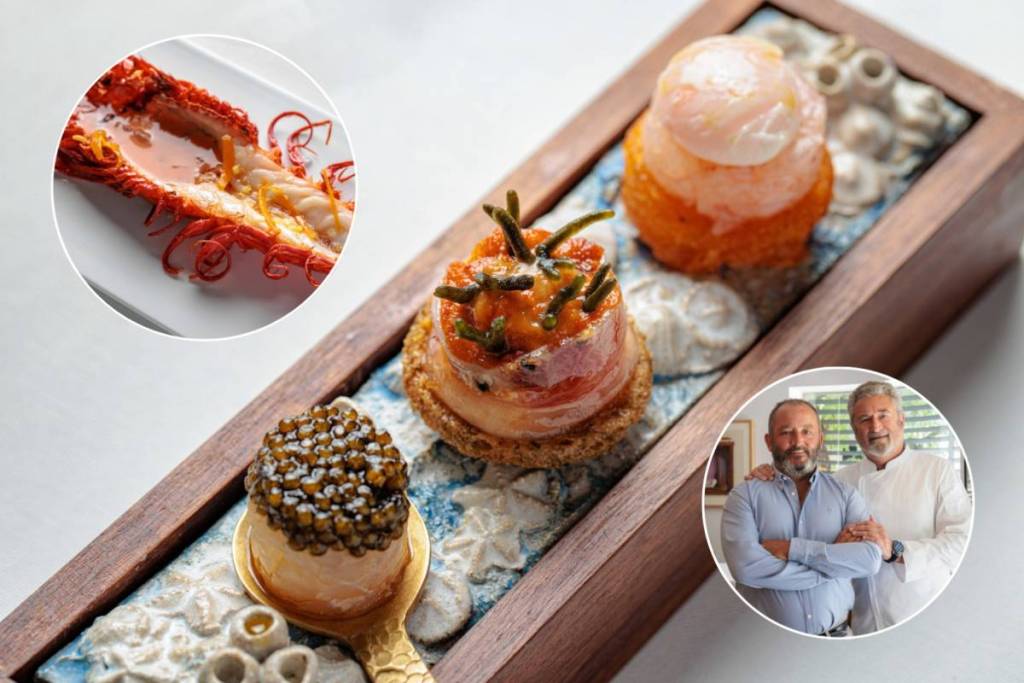
Some appetizers are sure to pique diners’ interest. Namely: grilled French oysters with gazpachuelo and garum; or the trio of aged red snapper and osetra caviar / shrimp tartare with French fries and quail egg yolk / scrambled eggs, Iberian pork jowl, and sea urchin.
Fish and Seafood: confit snapper with green asparagus and nasturtium pesto; grilled Barbate bluefin tuna belly with gremolata; grilled lobster with brown butter and wasabi dressing.
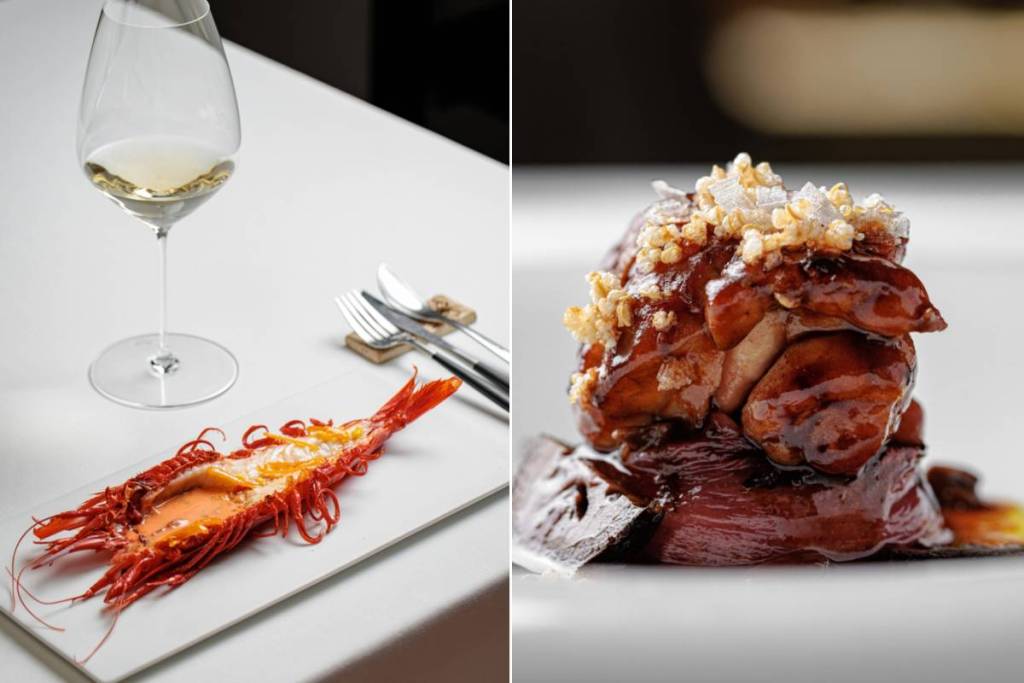
As for land-based dishes, they’re featuring D.O. Valle de los Pedroches suckling lamb loin with anchovy butter and capers; glazed veal sweetbreads with a vinaigrette of raisins and pickled walnuts; roasted foie gras with smoked eel sauce; scrambled eggs with Iberian pork jowl and sea urchin; and flame-seared tomatoes with figs in brine and tuna morrillo in partridge marinade.
Desserts: cherries with amarena, horseradish ice cream, and Giuseppe Giusti Modena vinegar, plus petit fours.
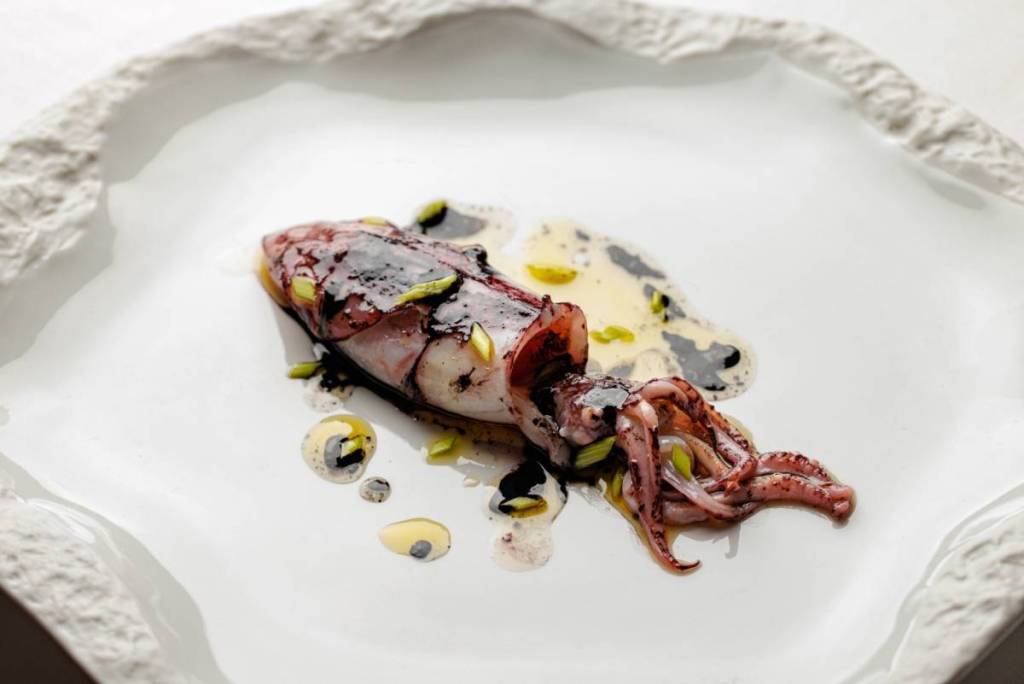
Some dishes are served only as part of the tasting menu, while others are available à la carte. In addition, the dining room staff offers off-menu items depending on what’s available at the market, such as confit baby squid from the estuary with a mousse made from its innards or green apple sorbet with sea lettuce. It’s worth asking about them.
The team and the producers
Giménez has worked in kitchens across France, the United Kingdom, the United States, and China, as well as at Madrid’s Teatro Real. From France, he brought technical precision; from the Teatro Real, rigor in execution. In Seville, he works with Javier Darío Álvarez, who oversees the grill, and Adolfo Ruiz Sanz, who handles research and development. In the dining room, Fernando Trujillo directs service, and Álvaro Pérez manages a wine cellar with over 400 labels.
The same principle of traceability applies to its land-based ingredients: Tribeca sources from producers who respect the seasons and have a direct connection to what they grow, raise, or produce.
You’ll find it at 3 Chaves Nogales Street. The restaurant has been awarded a Repsol Sun, is listed in the Michelin Guide, and offers both à la carte and tasting menu options. For more information, visit its official website.