
The Río Azul brewery in the Hytasa industrial park reopens to the public on September 11. Following a soft opening, the Taproom on Lana Street resumes operations with eight taps featuring its own brews and a menu of cold tapas designed to pair with each beer.
The reopening is the result of a deliberate decision: in recent years, Río Azul focused its resources on production and international distribution—its beers reached Barcelona, Stockholm, and Zurich—and the Taproom was put on hold.
“Sometimes it’s funny that it’s easier to find Río Azul abroad than in our own city,” admits Eloy del Río, the company’s founder and master brewer since 2016. The reopening aims to redress that imbalance and reconnect with the neighborhood and with Seville as a whole.
Eight taps and a menu of tapas to accompany them
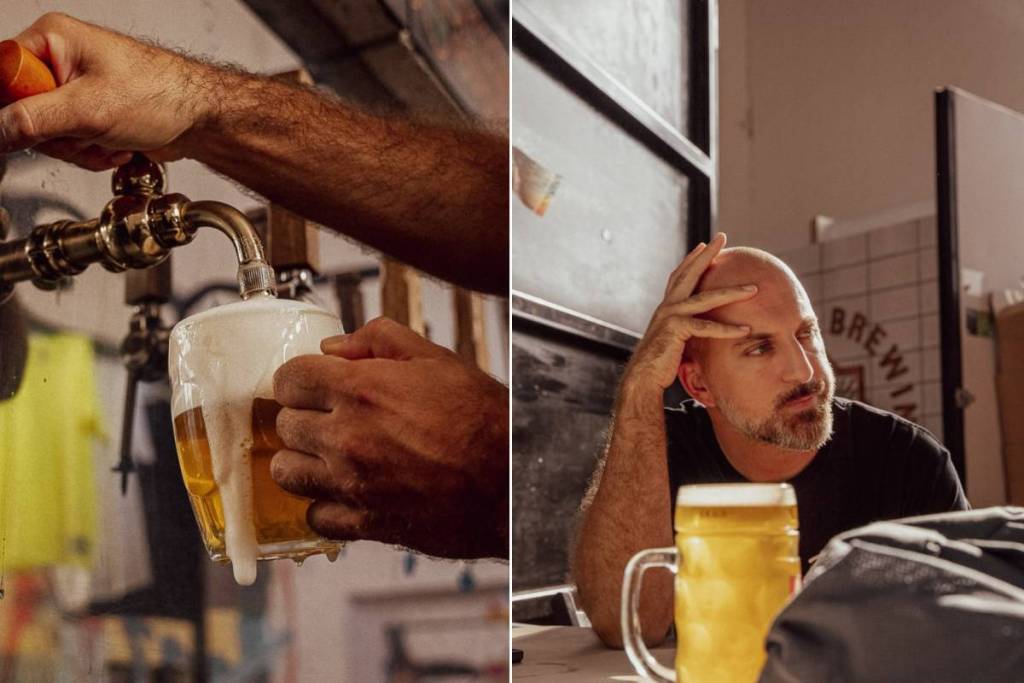
The Taproom’s bar nicely sums up the breadth of Río Azul’s offerings:
- The Goat (gluten-free Helles Bock)
- Bohemia (gluten-free Czech Lager)
- Hyperliquid (West Coast IPA)
- Blondie (Belgian Blonde)
- Fruit of the Loom (Red Berry Smoothie Sour)
- Surfing Waves (Session IPA)
- Final Form (Quadruple IPA)
- Acid Vision (Fruit Sour).
From the mildest to the most intense, all eight beers are served just a few meters from the fermenters where they’re brewed. There’s also a selection of cans from other craft brewers, available to drink in the taproom or to take away.
The food menu follows the same philosophy of simplicity: Cádiz-style pork rinds, gildas with anchovies and piparra peppers, French fries with pickled mussels, roasted peppers with frigate mackerel, Iberian ham and cheese. A short menu, designed to complement—not to take center stage.
Eloy del Río, who launched the current brewery in 2017, explains:
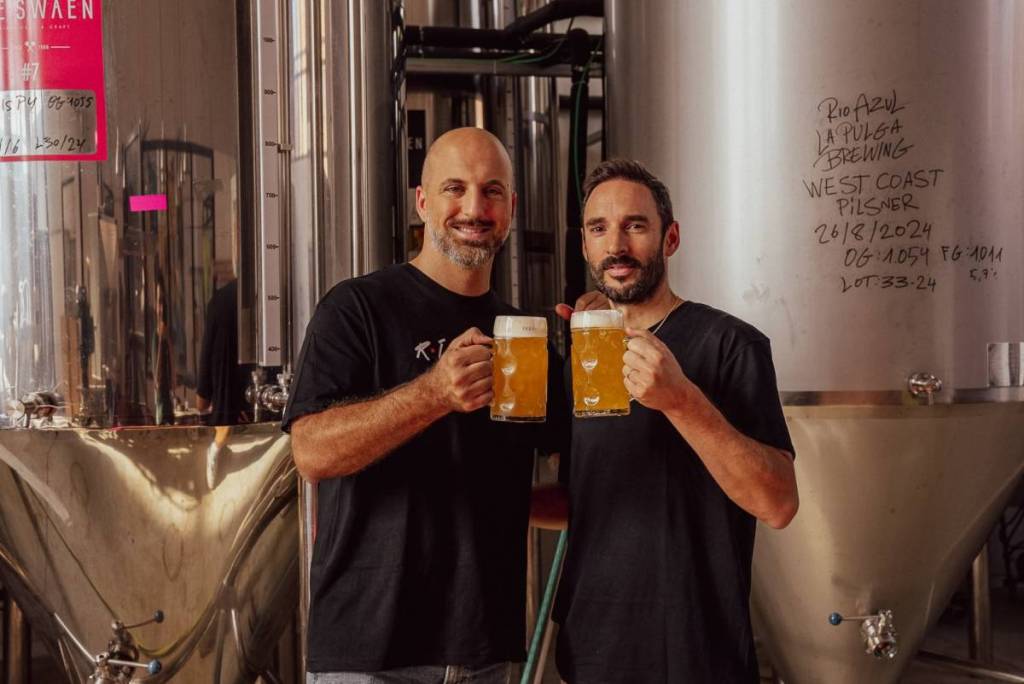
“During this time, we’ve focused a lot on the brewery and on taking our beers abroad, but we missed having that direct contact with people from the neighborhood and all over Seville. Here, you can literally have a beer right next to the tank where we brewed it, and that’s part of the essence of Río Azul.”
A decade later, the Taproom is reclaiming what’s hardest to export: its roots.”