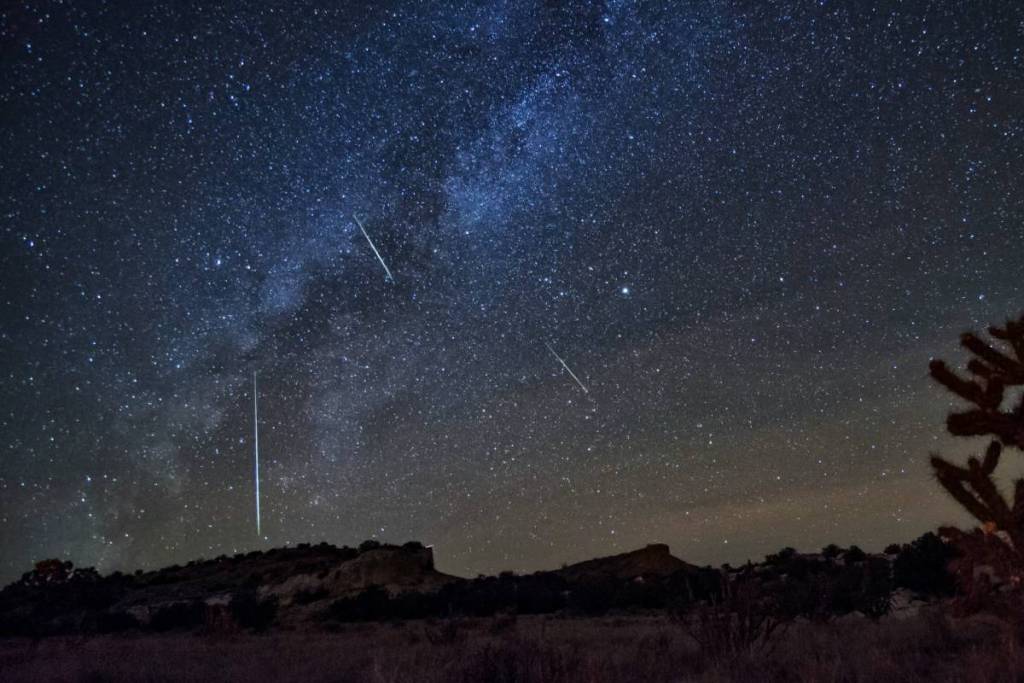

The astronomical calendar offers some highlights for the fall, with several meteor showers scattered from September through December. While the Draconids were visible earlier this month, the Orionid meteor shower reaches its peak in the early morning hours of October 21–22.
Formed from fragments of dust and ice left behind by Comet 1P/Halley, these particles enter the atmosphere at more than 66 kilometers per second, leaving fast, bright trails across the night sky. It is around this time of year that Earth passes through a ring filled with these fragments.
The best times to view this fall meteor shower
Although the activity lasts for several days, peak visibility occurs from midnight on October 21 until the first light of dawn on October 22.
In 2026, an estimated 15 to 20 meteors per hour are expected under dark skies. As for the Moon, it will be in its late first-quarter phase, so the night sky will not be free of its glow until the hours before dawn, between 2:00 and 6:00 a.m.
In any case, they will be visible starting at midnight and even during the days leading up to the peak.
Where to see the Orionids from Seville
To enjoy the spectacle in the province of Seville, it is essential to get away from the light pollution of the capital and the metropolitan area.
- Sierra Morena (Starlight Reserve). Towns such as Almadén de la Plata, Cazalla de la Sierra, Constantina, and Hornachuelos offer skies certified for astronomical observation.
- Doñana Natural Park (near Aznalcázar and Villamanrique). To the south, the open areas of pine forests and pastureland far from urban centers provide a clear horizon toward the east and southeast.
- Natural areas between Aznalcóllar and Sanlúcar la Mayor offer a quick getaway less than 30 minutes from the city.
How to Observe Them
The Orionids can be seen from both the Northern and Southern Hemispheres. You don’t need a telescope or binoculars; in fact, they narrow your field of view and make it harder to see the fast-moving streaks.
- First, locate Orion. Look toward the southeast; its “radiant” (the point from which the meteors appear to originate) is there, and look for them at an angle between 45 and 90 degrees. It is near the famous constellation Orion and its Belt (“the Three Wise Men”), although shooting stars can streak across any part of the sky.
- Let your eyes adjust. It takes at least 20 to 30 minutes in the dark for your eyes to get used to the dim light. Avoid looking at your phone screen while you wait.
- Bring a mat or reclining chair and warm clothing suitable for the drop in temperature during the early morning hours in Seville.