
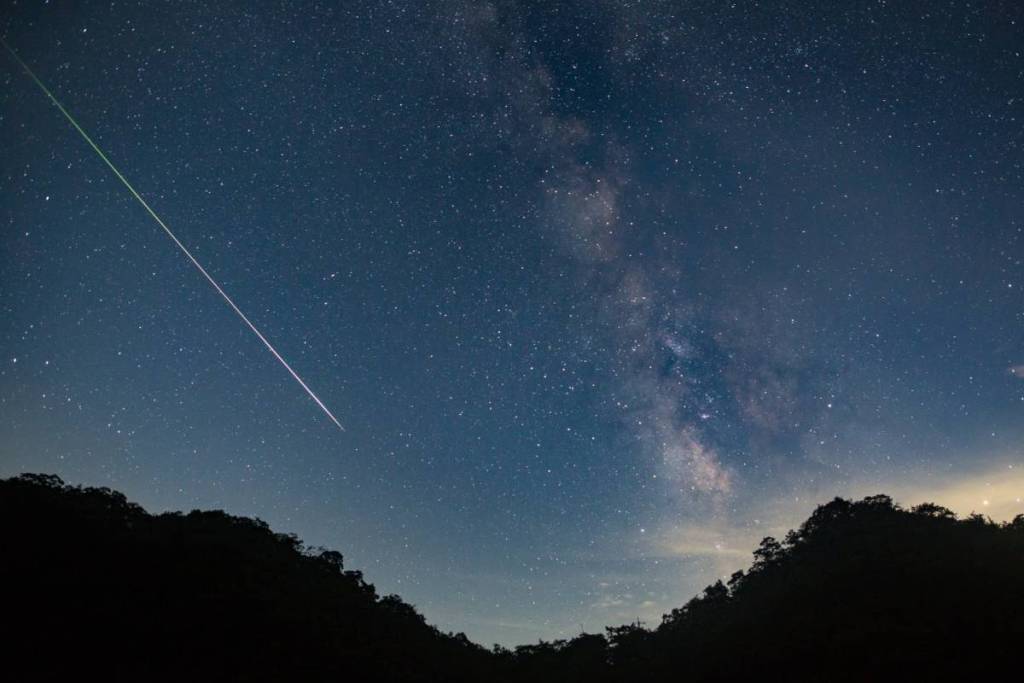

The Draconids are to fall what the Perseids are to summer— a parade of meteors streaking across the skies —and they’re a must-see on the calendar of meteor showers you can view in Seville. The fact that the eclipse caused such a stir—take note: we’ll have a total eclipse in Andalusia in 2027—wasn’t just because of its uniqueness; it was also because astronomy sparks interest.
As for this fall meteor shower, it will be visible in countries in the Northern Hemisphere between October 6 and 10, with peak activity occurring between October 8 and 9.
Recommended Articles
 The Navigalia Christmas light show returns to Seville with a nativity scene featuring lights and sound on the river and 56 performances: this year, tickets cost 3 euros per person
 Seville moves up Christmas 2026 to November 27: 300 streets and 35 monumental 9-meter-tall “giraldillos” on Avenida de la Constitución will be lit up before the long weekend
Although the 2026 event will be modest—about 5 meteors per hour traveling at around 20 kilometers per second—we should consider the advantages of this year’s conditions. With the moon hidden until sunrise, coinciding with the new moon on October 10, the sky will allow us to see the spectacle with greater clarity.
In any case, it’s essential that weather conditions be favorable and, of course, that you observe from alocation far from light pollution.
What time will the peak activity be?
The peak of the Draconids this year will occur at 3:00 a.m. CEST (UTC+2) on the Spanish mainland, in the early morning hours from Thursday, October 8 to Friday, October 9, 2026.
It’s a good idea to start preparing to observe it at dusk on Thursday, at the beginning of the night when the sky will be clearest.
The parent body from which the Draconids originate is Comet 21P/Giacobini-Zinner. These dust trails are named after the constellation Draco and intersect with Earth’s orbit in the fall as we approach the inner regions of the Solar System and the comet’s ice sublimates.
Where to See the Draconids in Seville This Fall
According to the StarWalk website:
To gaze at the sky these days, the so-calledStarlight Reserves are ideal; they are committed to protecting the night sky and facilitate stargazing, whether for scientific, natural, or cultural reasons.
In any case, all you need to do is find a spot where the sky is completely dark, free of light, and far from areas affected by light pollution, buildings, and trees in order to maximize your field of view.
Beyond Seville and its province, there are several areas in Andalusia that stand out for offering clear skies and visual experiences for astronomy enthusiasts.
The Los Pedroches Valley, Sierra Morena, the Sierra Sur of Jaén, the Sierra Sur of Cádiz, or the iconic village of Fuente Tójar are key viewing spots.
The Draconids, however, won’t be the last meteor showers of the fall; we’ll have to keep looking up at the sky to catch a glimpse of the Leonids and the Geminids in November and December, respectively.
