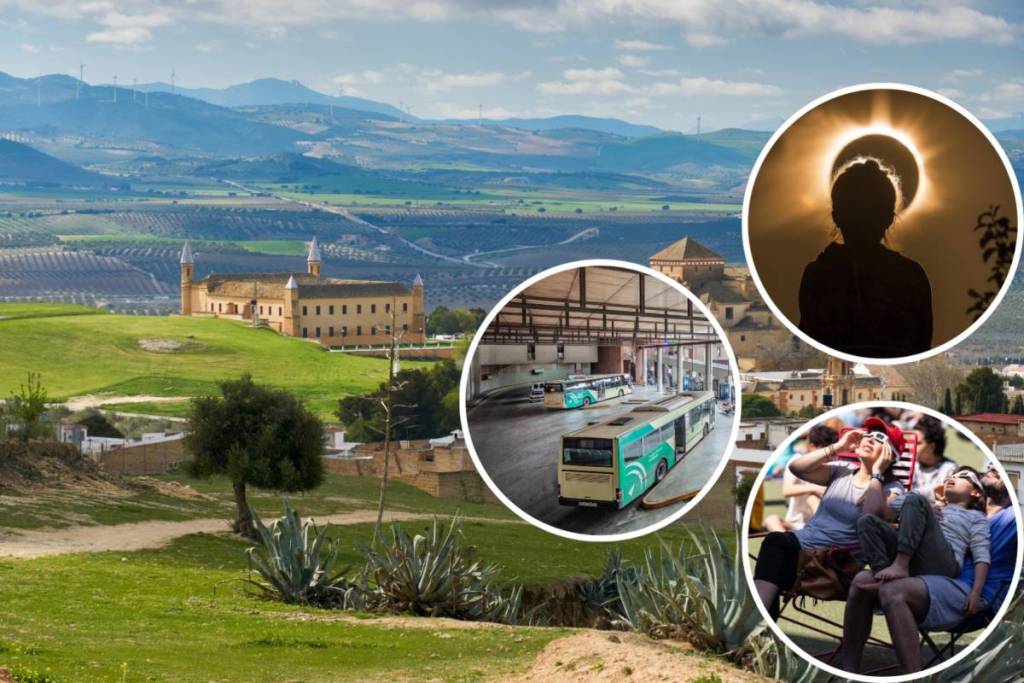

There are just a few days left to witness the astronomical event of the year: the extremely intense partial eclipse that will be visible in Seville next Wednesday, August 12. This historic event hasn’t been seen on the Iberian Peninsula for over 100 years. At around 8:37 p.m., the moon will cover nearly the entire solar disk, and many people are wondering where to enjoy the phenomenon at its peak.
To answer that question, just think about where in Seville you’d go to enjoy a beautiful sunset. Strategic towns that offer unobstructed views toward the west-northwest horizon, with flat or elevated terrain and low light pollution—ideal for the occasion. And an added bonus: you can reach our selection of towns for viewing the eclipse by train or via the Seville Consortium’s bus network.
Finally, if you’re planning to drive there to see it,it’s recommended that you arrive even before the day of the eclipse to avoid possible road closures.
If you’re traveling by public transportation—especially if you have to transfer—be sure to check the schedules carefully through official sources.
Isla Mayor, the Guadalquivir marshes in Seville
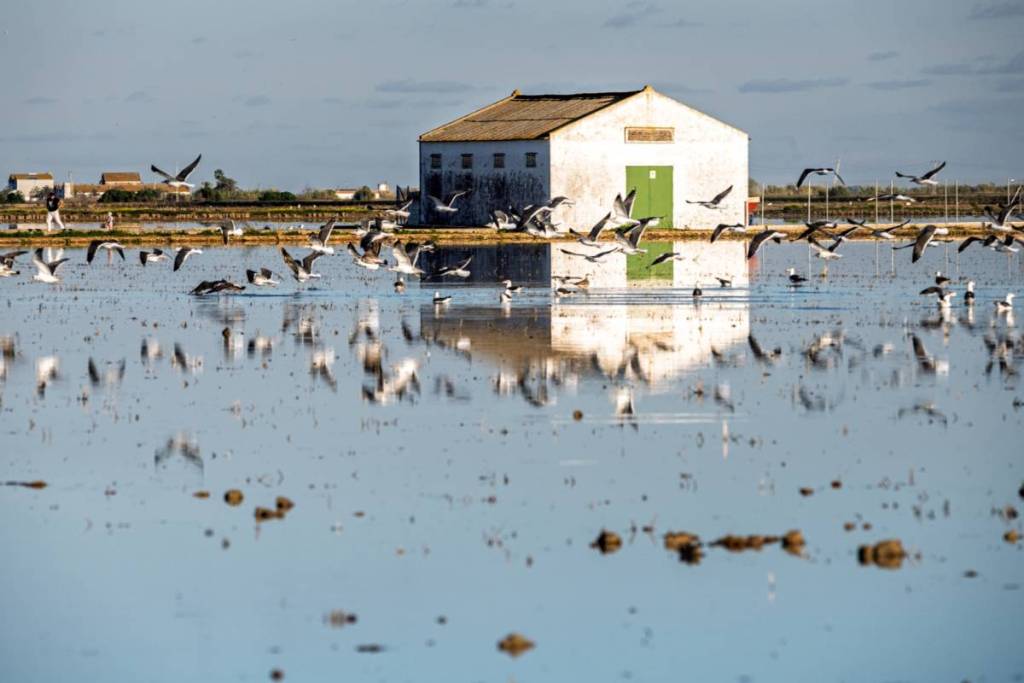
Isla Mayor is one of the best destinations for finding a flat, unspoiled, and unobstructed 360-degree horizon. Its rice fields in the marshes, in addition to possessing a beauty unique to the province, make for a perfect setting.
Since the Sun will be so low during the eclipse (barely 7°–8° above the horizon), the vastness of the landscape ensures that nothing will obstruct the view of the mystical sunset over the natural park.
How to get there by bus: Depart from the Plaza de Armas Bus Station in Seville on the Consorcio de Transportes’ M-143 line, operated by Autocares Paulino.
Las Cabezas de San Juan
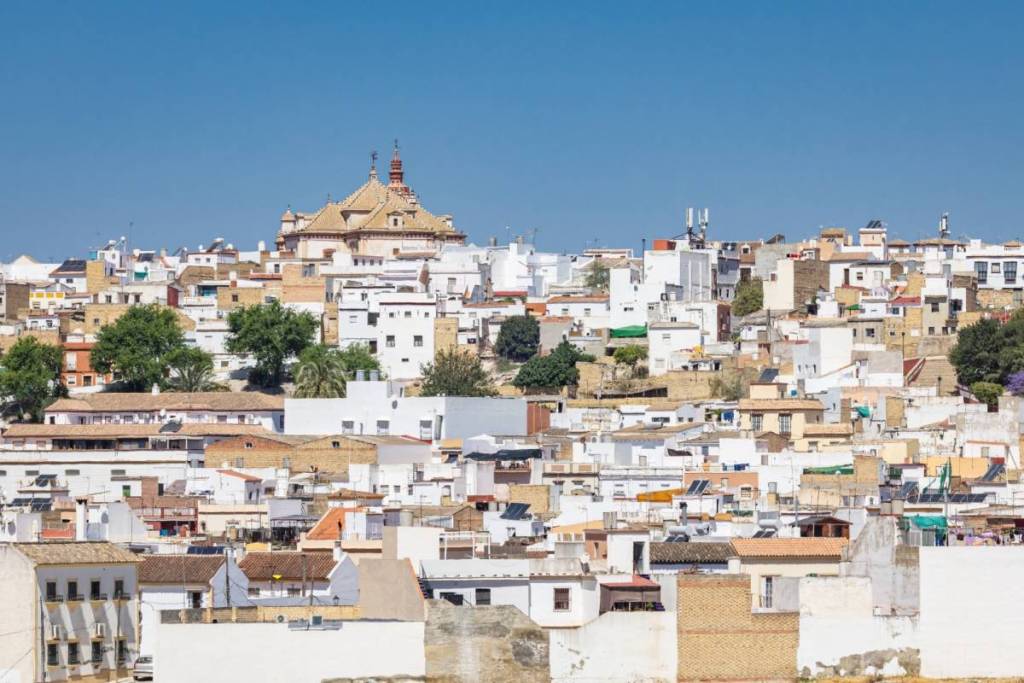
Located at the transition point between the countryside and the marshes, Las Cabezas de San Juan offers strategic vantage points such as the area around its historic center or the San Isidro Chapel.
From these elevated areas , you can see a clear horizon to the west-northwest as more than 95% of the sun’s disk is covered .
How to get there by bus or train: The M-221 line and services operated by Damas, ALSA, and MONBUS run daily between the Prado de San Sebastián Bus Station and the Plaza de Armas Bus Station in Seville and Las Cabezas de San Juan. You can also take the Media Distancia train bound for Cádiz.
El Pedroso

Located in the heart of the Sierra Morena, El Pedroso combines clear skies with ideal levels of darkness and atmospheric intensity.
With an eclipse coverage of over 95.5%, their expansive natural viewpoints make the surrounding areas the perfect place to combine eclipse viewing with the usual Perseid meteor shower that night.
How to get there by bus: Depart from the Plaza de Armas Bus Station on the intercity line operated by Autocares San Bartolomé.
Osuna
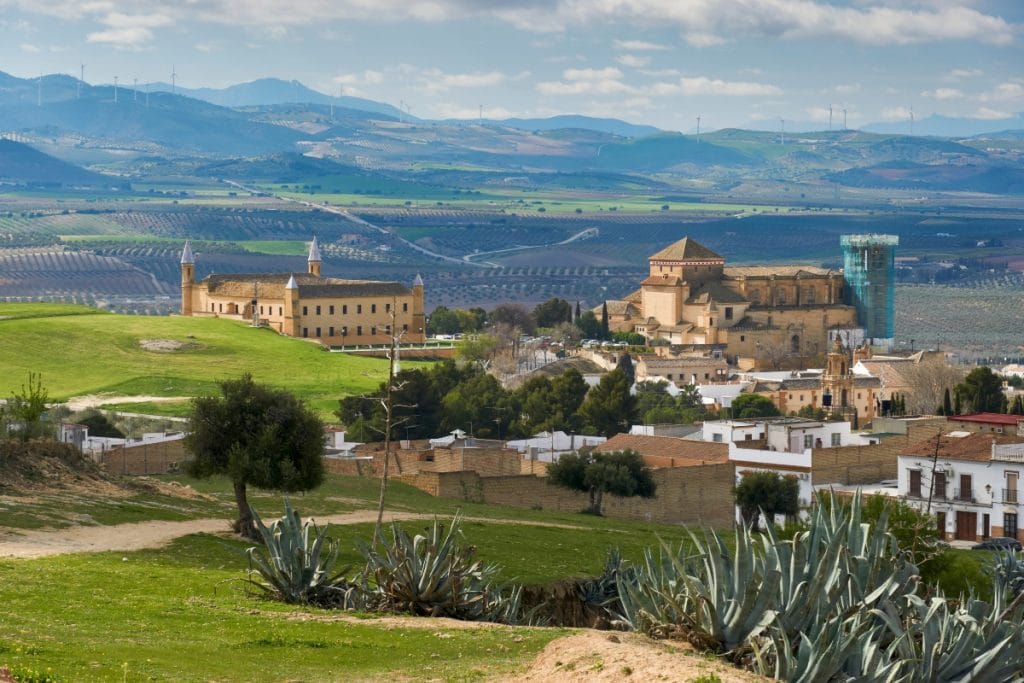
The “Villa Ducal” stands out not only for its rich historical heritage—it boasts one of the most beautiful streets in the world, according to UNESCO—and its iconic stone quarries, but also for its elevated vantage points overlooking the Sevillian countryside.
Climbing up to the collegiate church or the area around El Coto las Canteras allows you to watch the sun’s disk disappear against a panoramic view of an infinite, unobstructed horizon.
How to get there by bus: frequent services operated by Autocares Valenzuela and intercity routes departing from the Prado de San Sebastián Bus Station.
How to get there by train: You can also take the Media Distancia train bound for María Zambrano, which arrives in Osuna in just one hour.
Castilblanco de los Arroyos
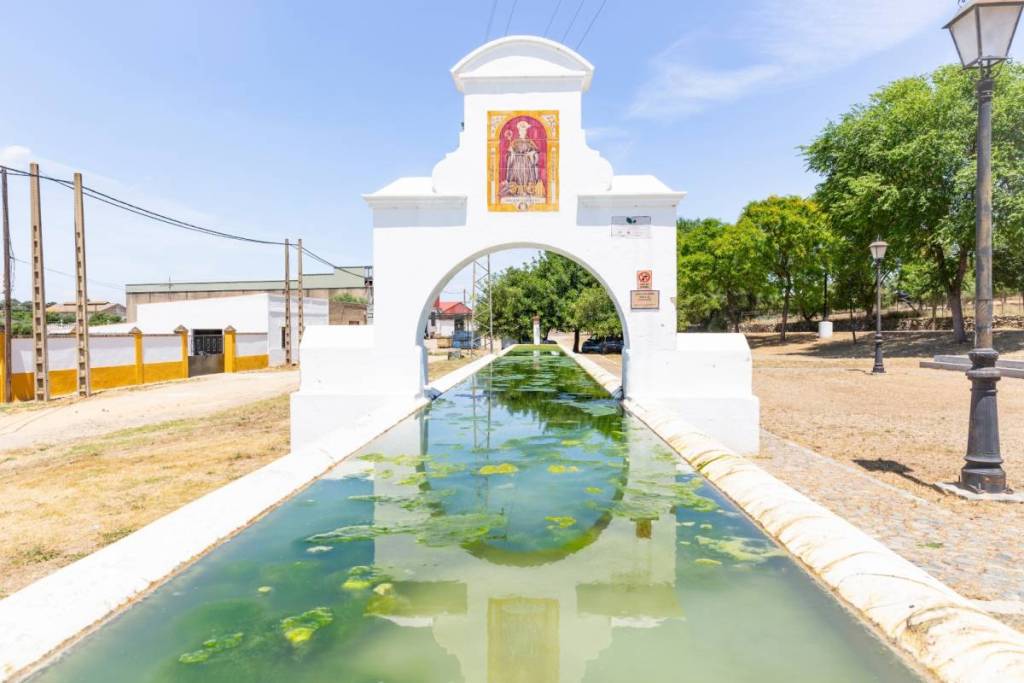
At the foot of the Sierra Norte, Castilblanco is a prime spot thanks to the clarity of its skies. Its peri-urban pastures offer an unobstructed view of the sun’s disk as it fades into the mountain sunset.
How to get there by bus: The M-102 intercity bus line (operated by Autocares Casal) connects Plaza de Armas Station with Castilblanco de los Arroyos on a journey lasting approximately one hour.

Known as the “Balcony of Andalusia,” Estepa’s elevated terrain and its historic Cerro de San Cristóbal offer a privileged view to the west. The sun will gradually set as the moon covers virtually its entire visible surface.
How to get there by bus: Regular departures from the Prado de San Sebastián Station operated by ALSA and Autocares Valenzuela.