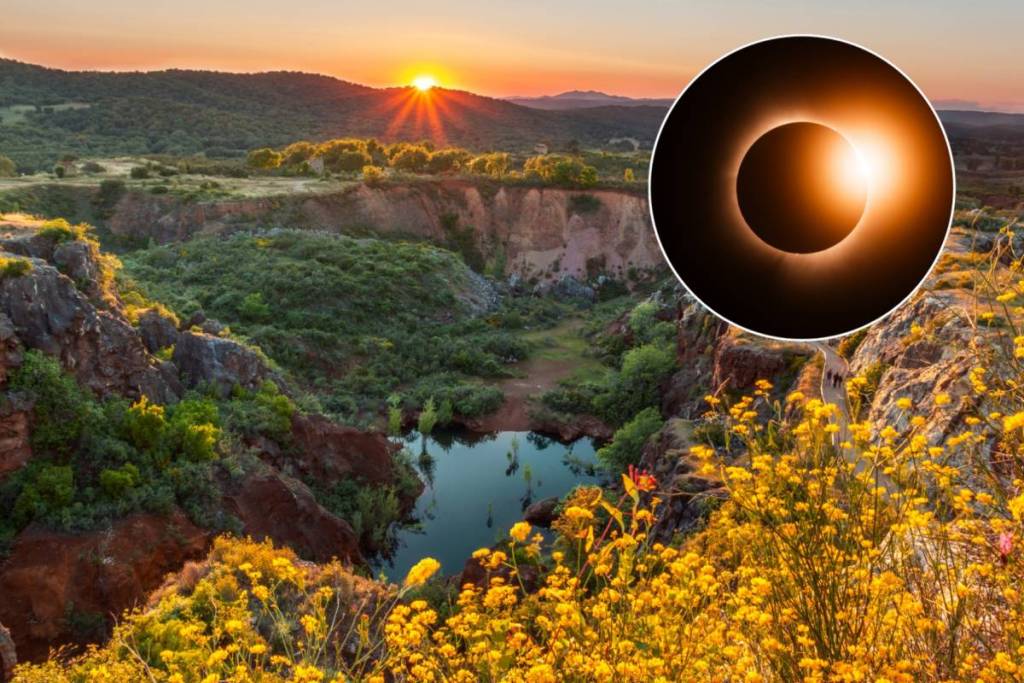

The solar eclipse that will darken the sky for a few moments on August 12 is sparking interest among Sevillians. Although the eclipse won’t be total in Andalusia, it’s still an unprecedented phenomenon after more than 100 years. Some will head up to their rooftops in the capital, others will watch the eclipse in the Aljarafe, and still others will opt for the Sierra Morena in Seville.
Because the true spectacle requires getting away from the asphalt and light pollution—and the Sierra Morena Natural Park knows this all too well. Nestled deep within it is Cerro del Hierro, a Natural Monument that not only looks like something from another planet but also offers the perfect conditions for experiencing the eclipse in all its splendor.
A movie-worthy setting with clear skies
Located between San Nicolás del Puerto and Constantina, Cerro del Hierro is famous for its impressive karst landscape: stone spires, chasms, and labyrinths of reddish rock carved by erosion and by ancient Roman and modern mining activities.
But beyond its almost Martian-like beauty, there are three key reasons that make it the ultimate viewing spot in the province:
- Starlight-certified dark skies: the Sierra Morena region of Seville boasts the International Starlight Reserve designation, guaranteeing the near-total absence of light pollution and a clarity of the night sky unattainable from the city.
- Clear horizons and elevation: its lookouts and elevated trails offer a pristine 360-degree panoramic view, free of buildings or power lines that might obstruct the horizon during a solar or lunar eclipse.
- A magical and immersive atmosphere: watching the shadow cast upon the stone walls and karst labyrinths creates a contrast of light and shadow that is unique in all of Andalusia.
Tips for Your Visit
To get the most out of the experience, it’s important to remember that this is a protected natural area:
- Arrive early. Parking spaces at the Visitor Center are limited, and access to the best viewing spots requires a short walk.
- Proper gear. Bring hiking shoes, water, and—since this is a solar eclipse— approved eye protection (glasses with an ISO 12312-2 filter).
- Respect the environment. Always stay on the marked trails to protect the ecosystem and avoid accidents among the rock crevices.