

One of the most magical moments of Holy Tuesday in Seville takes place near the Murillo Gardens, around 1 a.m. Everything goes dark except for the candles of the Virgin of La Candelaria.
In addition to this unique moment, there are other interesting facts hidden within this special day. If you’ve missed the essential details about Holy Monday in Seville, you can read them here.
The Palomita of San Benito
The Virgin of the Incarnation is known as the “Palomita de Triana” because this Virgin was carried in a canopy featuring a silver dove on its roof.
Back then, the brotherhood had its headquarters in Triana, and today all that remains is the memory preserved through this unique nickname.
La Candelaria: The Light of Holy Tuesday
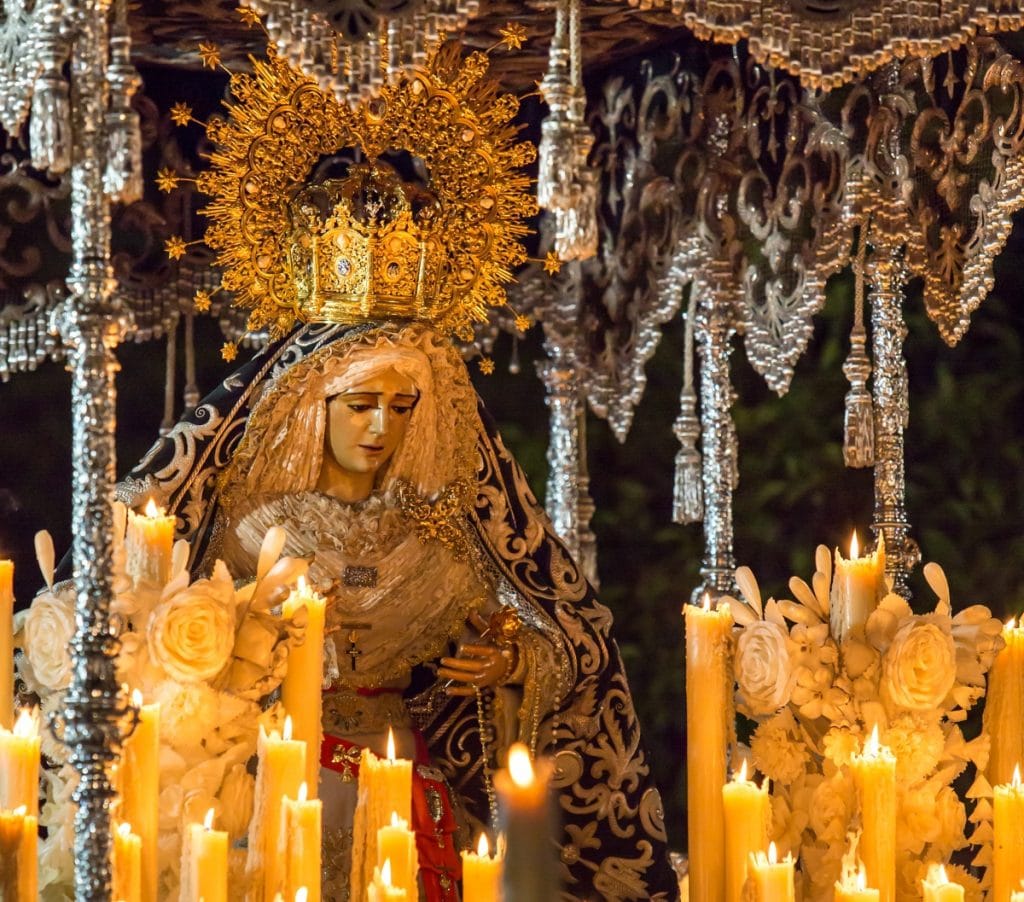
As we noted at the beginning, one of the most memorable moments of the entire Holy Week in Seville comes from the Calendaria.
Everything goes dark except for the candles of the Virgin of La Candelaria. It is, in fact, the only float of a Nazarene brotherhood in Seville that is illuminated by windscreen candelabras.
Another interesting fact. Our Father Jesus of Health is small in size because he was made to fit into the niche of an altarpiece.
The Bell of the Dulce Nombre
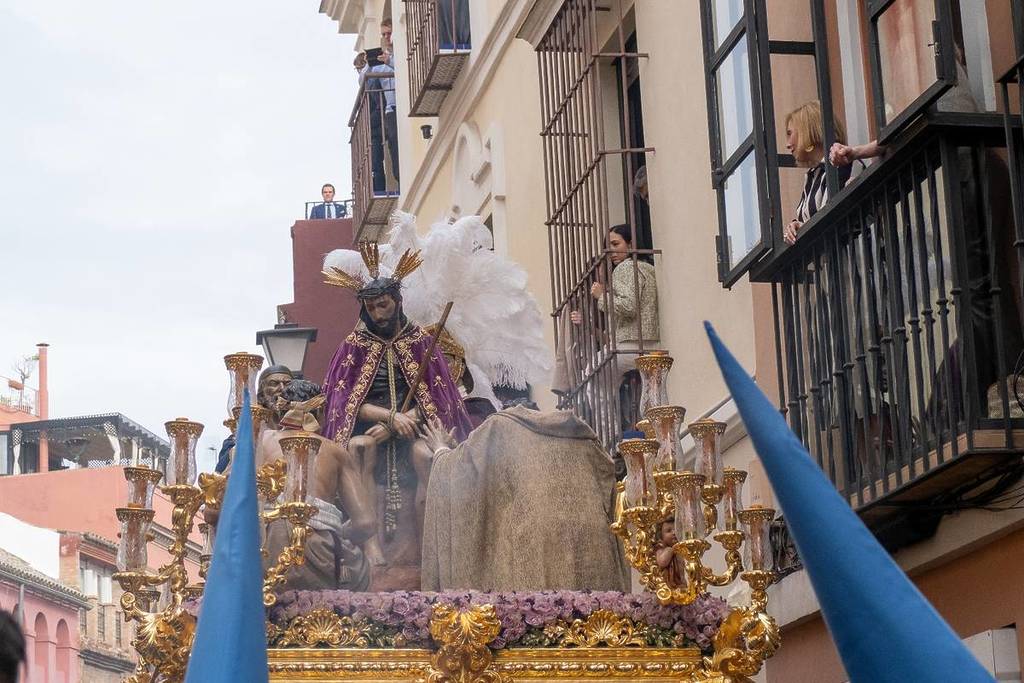
The knocker on the float depicting the mystery of Our Father Jesus before Annas is shaped like a rope. This symbolism recalls the cord, rope, or rope with which Christ was led captive before Annas.
The metal knocker is a donation from the San Antonio Foundation. In 1939, Adolfo Escacena recast it in bronze. This mystery float features a censer that emits incense.
Another principal image of the brotherhood is the Santísimo Cristo del Mayor Dolor, by an anonymous artist dating from approximately 1600.
Andalusia in the Brotherhood of El Cerro
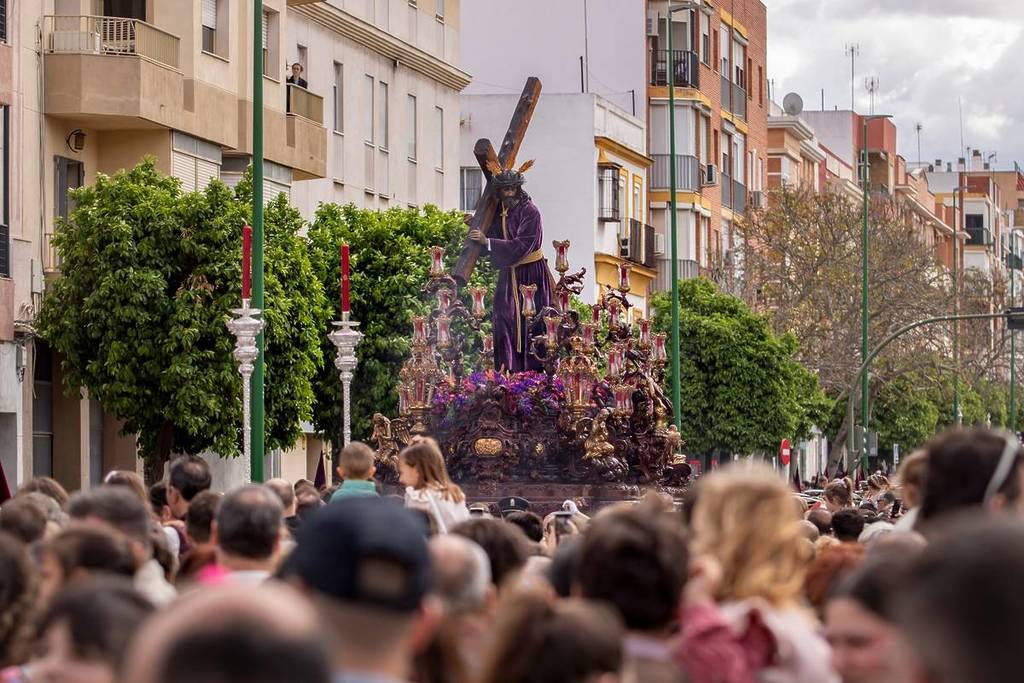
This brotherhood plays the anthem of Andalusia at the start of the procession instead of the Spanish national anthem, which it performs afterward. It is the only one to make this change.
Likewise, one of the figures in the mystery of the Santísimo Cristo del Desamparo y Abandono, which consists of four soldiers accompanying Jesus, is inspired by the journalist Manuel Lorente Garfias. The sculptor Juan Manuel Miñarro created them between 1989 and 1990.
A skull at the feet of the Christ of the Souls
Since 2022, the Cristo de las Almas has been carried in procession with a skull beneath his feet. According to Christian iconography, Adam’s skull was hidden on Mount Golgotha, the very place where Jesus died. It is thus a representation of the victory of life over death and original sin.
The Brothers of the Holy Christ of the Good Death
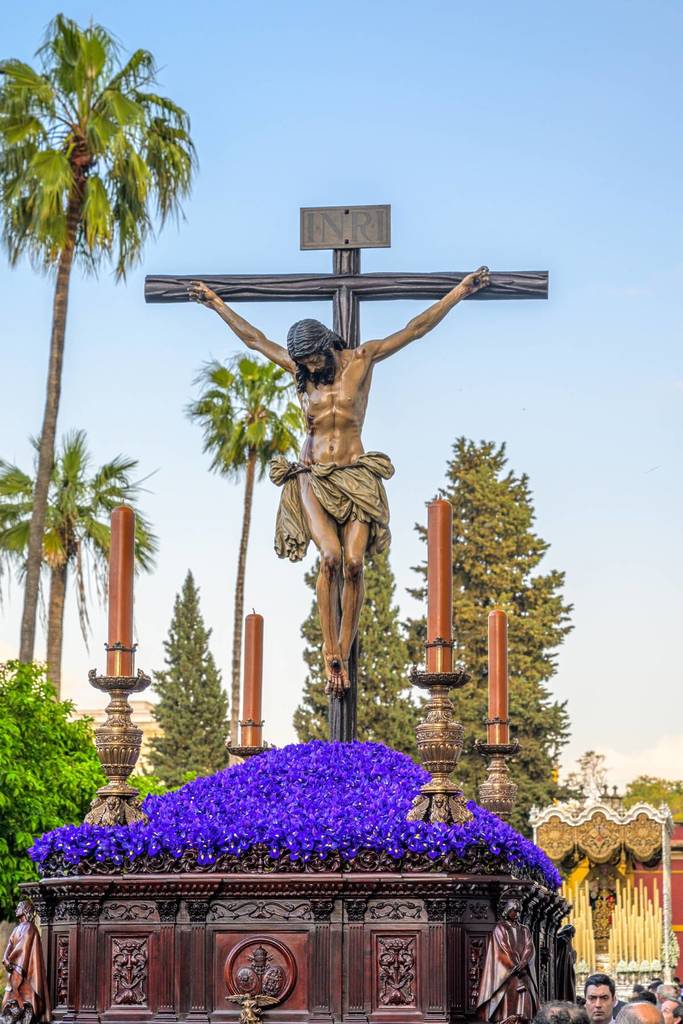
During Holy Week in 1973, the Brotherhood of Los Estudiantes was the first in Seville whose bearers were brothers. Specifically, a group of 36 bearers—brothers between the ages of 16 and 30—carried the Cristo de la Buena Muerte.
