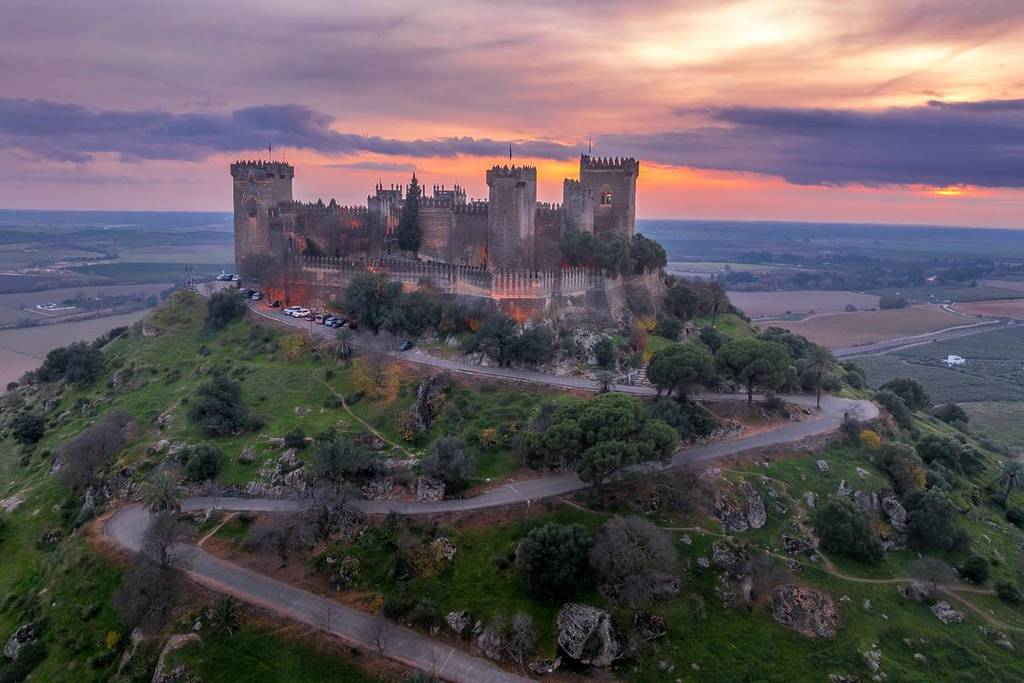

Perched atop the Middle Guadalquivir Valley, the castle in Almodóvar del Río is one of the best-preserved medieval castles in Europe—an imposing gem located less than two hours from Seville. Its appearance, however, has not remained unchanged over its thirteen centuries of history.
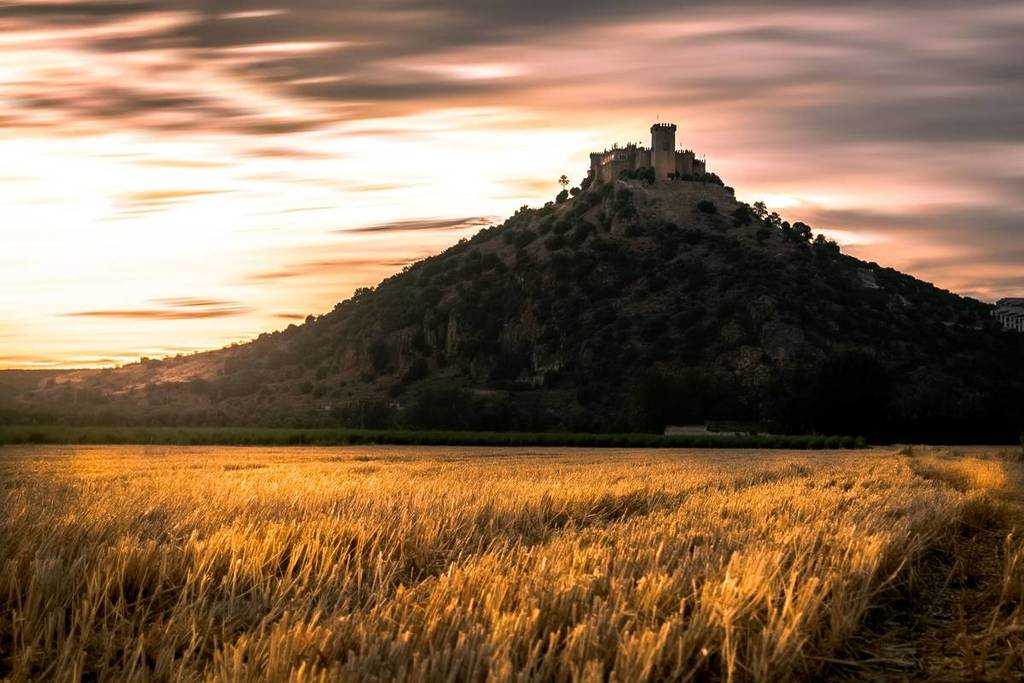
There are many neighboring towns from which you can see this fortress, strategically built on a hill 252 meters high. It lies next to the Guadalquivir River, near the Sierra Morena, and halfway between Córdoba and Seville.
Almodóvar del Río—formerly known as Almudawar Al-Adna back in the 9th century—and its castle were linked to the Caliphate of Córdoba; they belonged to the Taifa of Carmona, then to that of Seville, and to the Almohad Empire until they were surrendered to Ferdinand III “the Saint” in the early 13th century.
In the years that followed, it went from being a royal residence to becoming part of the Order of Calatrava, first, and then the Order of Santiago, undergoing various expansions along the way.
It wasn’t until 1629 that Francisco de Corral y Guzmán, Count of Torralba, acquired this property , which had fallen into disrepair over the centuries.
Almodóvar Castle Regains Its Splendor
It would take a great deal of time and effort to restore the splendor that this Cordoban fortress displays today. We must travel back to the late 19th century. Rafael Desmaissières y Farina, who inherited the County of Torralva at the age of just 29, was determined to restore the castle.
To this end, he worked with architect Adolfo Fernández Casanova, who was responsible for the restoration of the Seville Cathedral and who would also devote himself to the ambitious project of refurbishing and beautifying this Andalusian landmark. The work would continue from 1901 until the outbreak of the Civil War.
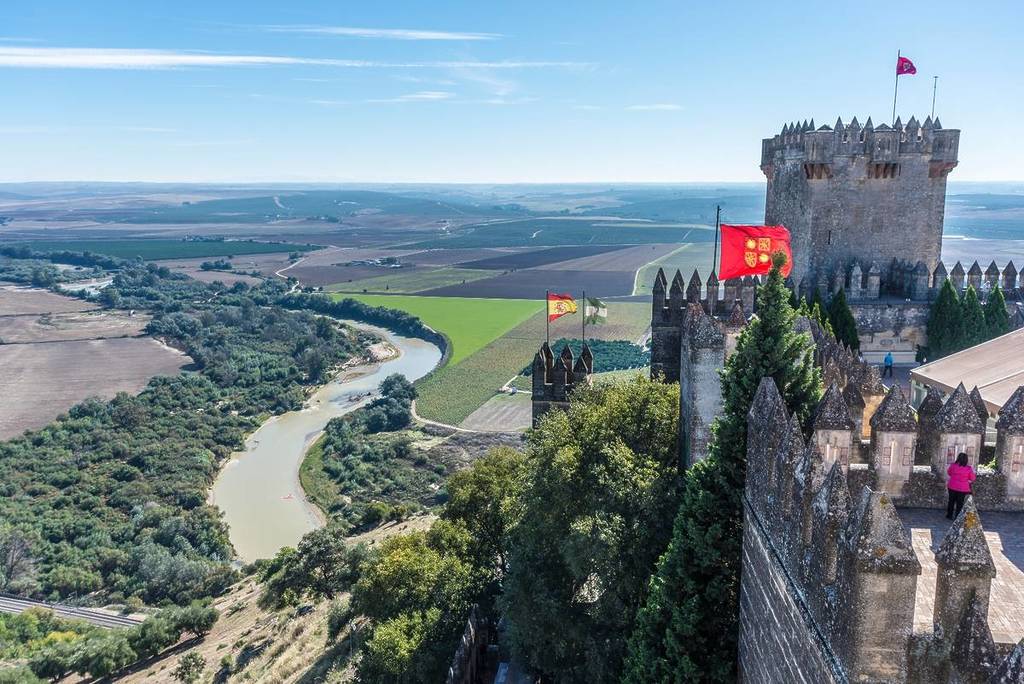
Nearly 800 workers labored over the course of 36 years to build an access road and restore the walls, battlements, and towers that today welcome thousands of visitors each year.
Tours and Activities at the Castle
Fernando de Solís-Beaumont, the great-great-grandson of the 12th Count of Torralva, is the owner of this building, which opened its doors to the public in 2001.
The rest, as you can imagine, is a steady stream of curious visitors, drawn to this walled complex that you can explore in its entirety (except for the Neo-Gothic Palace). Its towers, rooms, courtyards, the viewpoint, the Moat Garden, and its Plaza de Armas.
How much does it cost to visit Almodóvar Castle?
In addition, guided tours, dramatized tours, and school field trips are offered at this site, as well as cultural activities that punctuate the annual calendar. These include the medieval festivals, held in spring and fall (the next ones are on October 17 and 18); combat training sessions; a medieval lunch; a fun feast; and the Night of the Black Moon. You can find all the details and dates on the castle’s website.
As for admission prices, the general admission fee is €10 (€8.50 for reduced-rate tickets, €6 for children up to age 13).
Filming Locations for Movies and TV Series
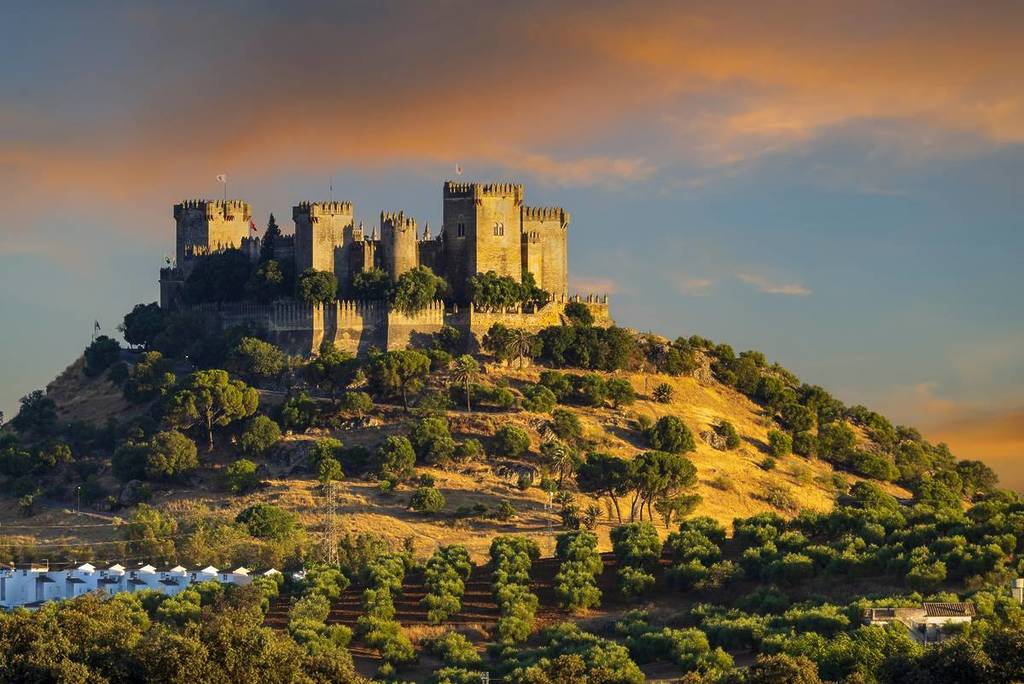
The beauty of the monument, especially its setting, is impossible to miss—not even to film and television producers. Indeed, Almodóvar Castle, whose fame reached its peak when it became Highgarden (Game of Thrones), has served as a filming location for various movies and TV series.
Yes, Olenna Tyrell and Jamie Lannister helped put this destination on the map nearly a decade ago, but other charismatic characters have passed through here as well.
Juanito Valderrama strolled around the castle’s surroundings in *El rey de la carretera* ( 1956), and Ava Gardner and Omar Sharif did the same during the filming of *Harem* (1986). The 1990s series *Al Ándalus, el camino del sol* and the film *Entrelobos* (2010) also found this castle to be a magnificent setting.
Restaurants in Almodóvar and the surrounding area
When it comes to dining, Almodóvar del Río is fortunate to have a restaurant distinguished with the Bib Gourmand from the Michelin Guide. La Taberna de Cuatro Caminos offers simple, slightly modernized cuisine that breathes new life into the region’s culinary scene.
Highlights include its famous croquettes—an original recipe by chef Ricardo Arribas—and its mazamorra. Of course, you’ll also find Cordoban salmorejo; the “cortijo” scrambled eggs, another of this restaurant’s classics; and the “La Taberna” churrasco made with Iberian sirloin from the Valle de los Pedroches (Sierra Norte, Córdoba).
Other good restaurants include Peña Flamenca La Soléa, Mesón La Bodeguita, and La Taskita del Sibarita, all located in Palma del Río.