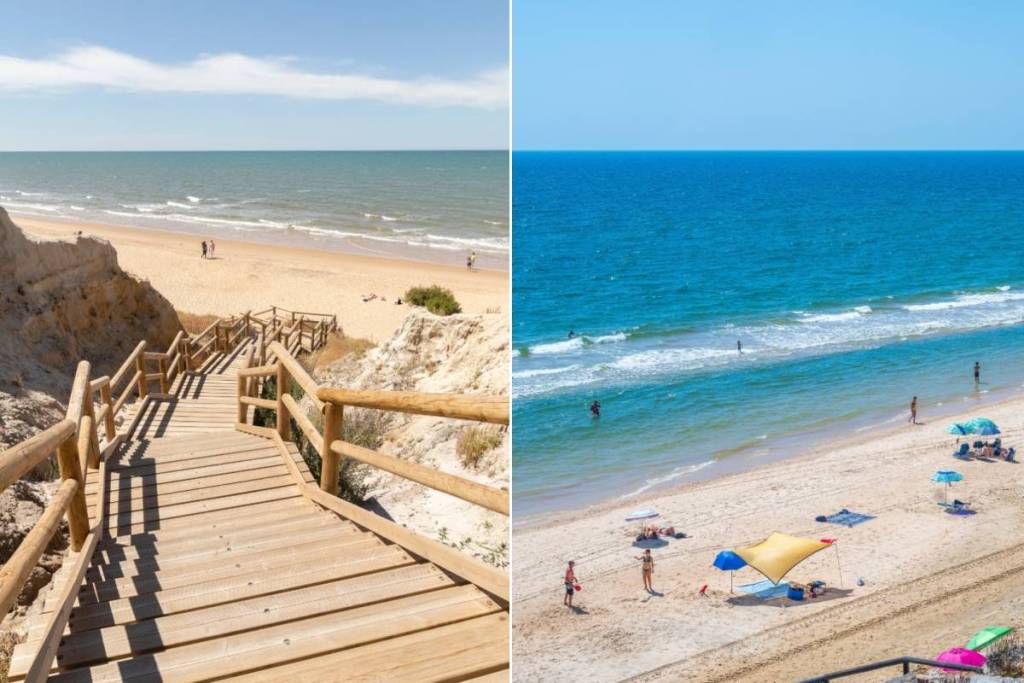

The beaches along the Andalusian coast are blessed with kilometers of summer possibilities—there’s no doubt about it. Family vacations in Chipiona, Matalascañas, or Torre del Mar; the lively queer scene in Torremolinos; and dozens of destinations that look like they’re straight out of a postcard. Andalusia also boasts secluded coves and nearly pristine beaches, and very close to Seville, in fact, lies a beautiful beach where the Atlantic belongs to those who dare to walk a little further.
Take the A-49 for just over an hour to reach Cuesta Maneli, located in the heart of the Doñana Natural Park, between Matalascañas and Mazagón. This stretch of sand is an open secret and probably one of the most spectacular beaches in southern Spain.
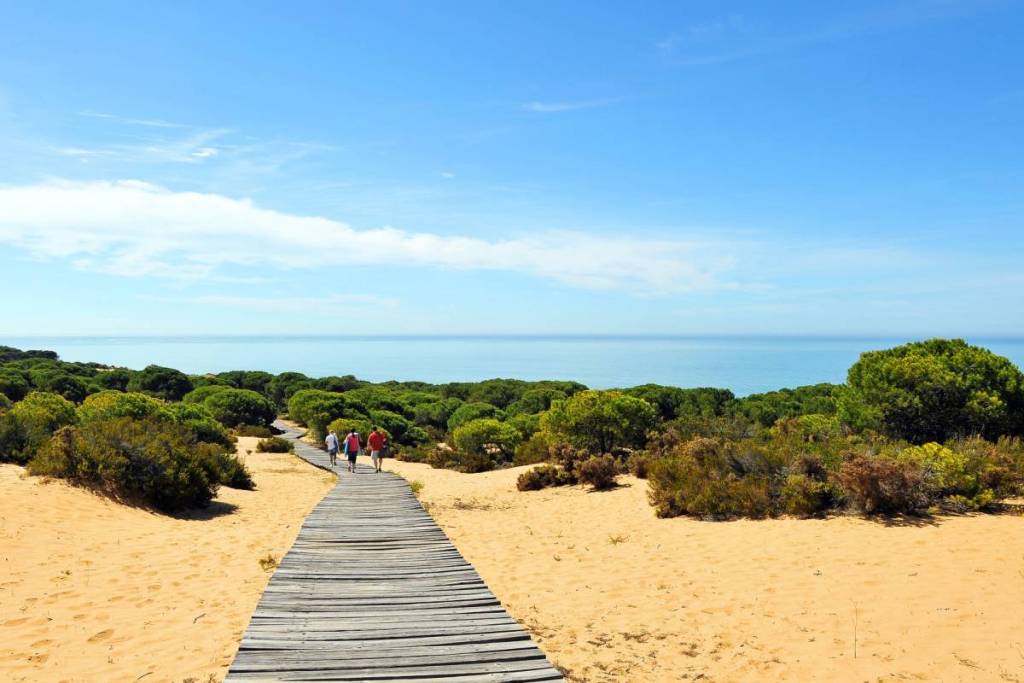
A trail through the pine trees leading to the sea
Travelers seeking vast beaches and clear waters will find their paradise here. But little else. Cuesta Maneli has two major drawbacks—which are also its strengths: its unspoiled and isolated nature, and its lack of amenities.
To reach this paradise, you’ll need to take a walk starting from the official parking lot (which costs €3 per day)—located at km 38.5 on the A-494 highway. A 1.3-kilometer boardwalk winds through a sea of pine trees and fossil dunes, leading you to the sea.
The walk takes about 20 minutes, during which the scent of pine, wood, and rosemary gradually blends with the salty breeze. And right at the end, the reward: the iconic railing overlooking a panoramic view of endless sand and open water.
The Asperillo Cliff: A Natural Monument Unique in Europe
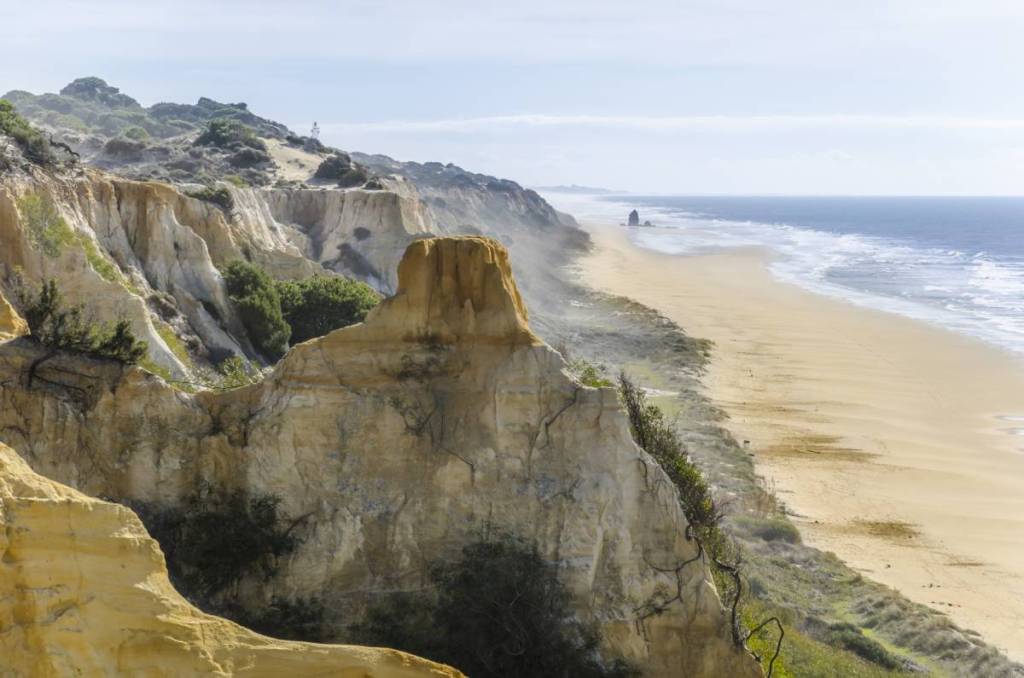
While the beach impresses with its vastness and how unspoiled it remains, what truly takes your breath away is the panoramic view that opens up from the lookout point: the Acantilado del Asperillo.
This escarpment, considered the highest coastal formation of its kind in Europe and designated a Natural Monument, is actually a living wall of ancient sedimented sand dunes that stretches across twelve hectares.
The oldest materials at this great landmark date back millennia—specifically, 15,000 years of geological history. Water from nearby streams and the force of the wind have shaped the cliff face, creating geometric undulations and layers of ochre, orange, and white hues that are clearly visible from the shore.
This impressive natural barrier flanks the well-known Playa de Castilla, so named because, following the Castilian conquest, it became the first direct outlet to the Atlantic in the southern part of the Spanish Crown’s territories.
The golden rule for protecting this unspoiled haven
Cuesta Maneli is the perfect place to unplug. With virtually no cell service, no restrooms, no showers, and no restaurants, it stands out as a favorite destination for those who surrender themselves to the sea without reservation.
A beach umbrella and sunscreen, a small cooler stocked with snacks and drinks, shovels and other summer essentials, perhaps a book, and the endless expanse of the sea. Plus, it’s a naturist beach if you head a little to the right.
Readers should note that the bike path is only accessible as far as the lookout point; the descent to the beach is not accessible to people with limited mobility.
In addition, and in order to preserve this protected ecosystem, be sure to take all the trash you generate with you so that this space can continue to retain its beauty and essence.