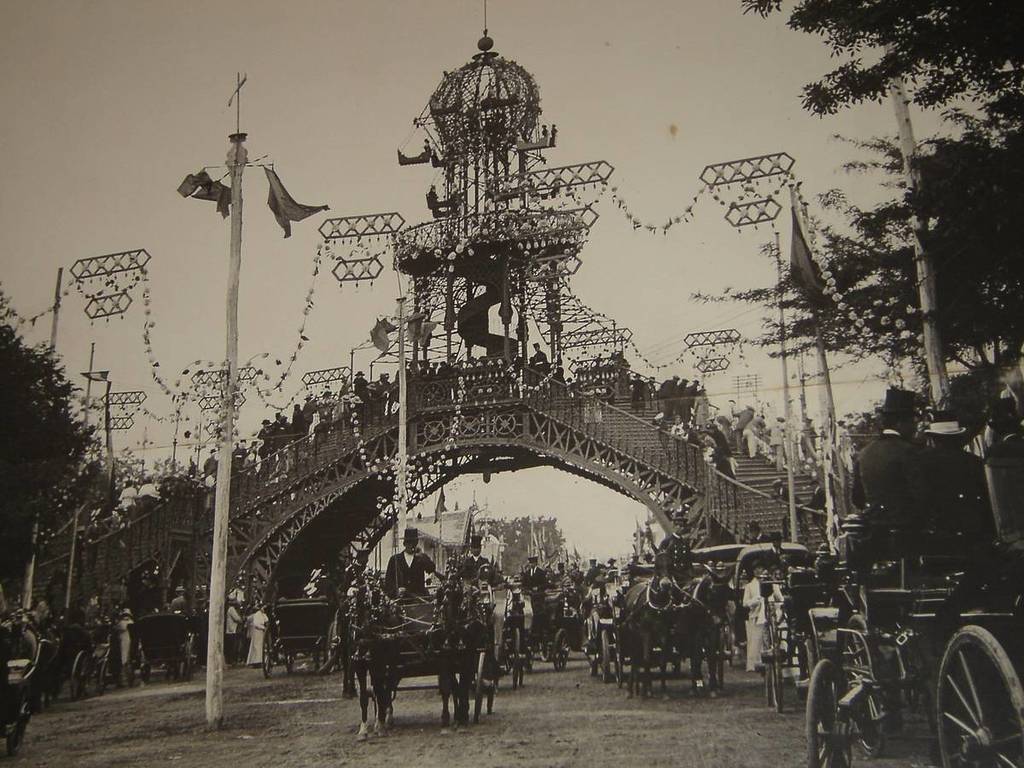
There are places in cities that can only be visited in memory. Such as projects that never saw the light of day or those that were built only to disappear with the same diligence. That nostalgia awakened by the ephemeral pavilions of Expo 92 or the gates of the fair. Above the latter is an extinct structure that gave rise to this tradition of welcoming visitors to the Real and which could have become an iconic monument: the Pasarela or Pasadera de Sevilla.
The first entrance to the Seville Fair
Erected in Seville at the end of the 19th century, it stood next to the Prado de San Sebastián between 1896 and 1920. An iron tower inspired by the Eiffel Tower in Paris dominated this area and became an indispensable part of the spring festivities.
In fact, its inauguration coincided with the first day of the fair: April 18, 1896.
Industrial engineer Dionisio Pérez Tobía designed this historic emblem, which the Perea brothers built in their foundry, according to anthropologist Salvador Rodríguez Becerra.
Why was the Pasarela demolished?
In 1920, the decision was made to demolish the Pasarela. The official version, as mystery has surrounded its demolition, argued that it was necessary to “free up the urban space” it occupied in order to prepare for the expansion of the imminent Ibero-American Exposition of 1929.
An excuse that, with the passage of time, raised doubts; in 1929, the site that originally had to be freed up was used to build the Fountain of the Four Seasons (by Manuel Delgado Brackembury) that we know today.
It is known that its 81,297 kilos of iron were dismantled and sold for 45,738 pesetas at the time.
Today, the historic footbridge lives on only in old postcards and in the memory of what Seville was or could have been.