
On August 12, an astronomical event unprecedented in over a century will compel us to look up at the sky. The total solar eclipse will cross the peninsula from northeast to southeast, plunging the sunset into complete darkness for a few moments. The show is set to begin.
Although the path of total darkness does not pass directly through Seville, experts agree on something surprising: our province is emerging as one of the ideal destinations to enjoy this historic phenomenon.
A 94.59% eclipse and a key advantage: clear skies
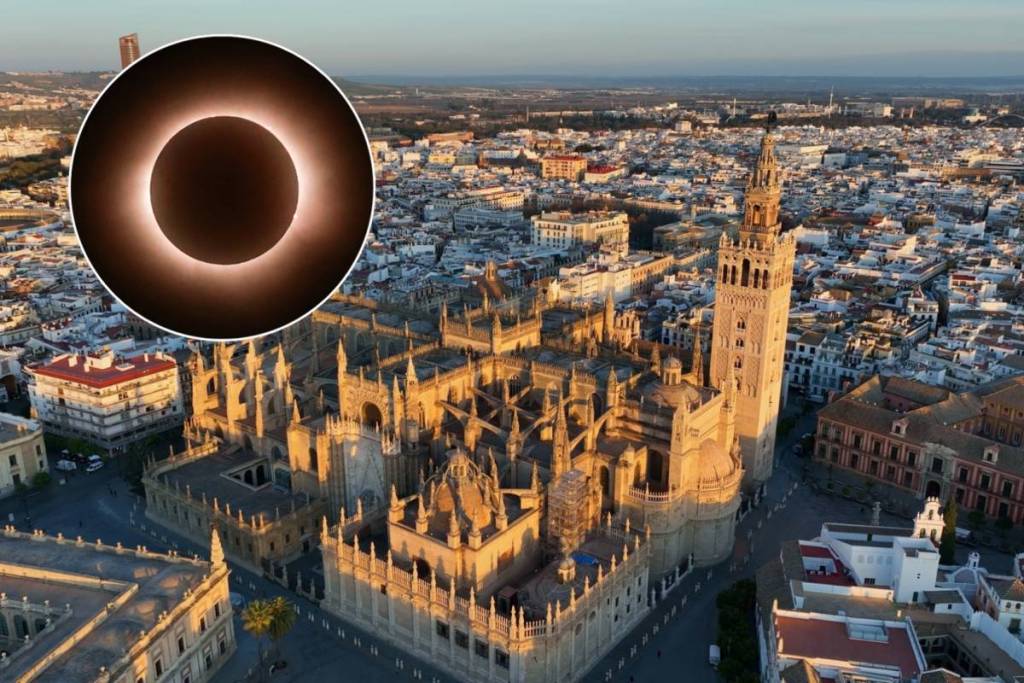
Technically, in Seville we’ll witness a partial solar eclipse, but with a spectacular degree of coverage: the Moon will cover 94.59% of the Sun’s disk.
Why do the National Geographic Institute (IGN) and the AEMET suggest staying in Seville rather than traveling to the path of totality (such as Asturias, Cantabria, or Castile and León)? The answer lies in the clouds.
The Aemet has analyzed meteorological records from the past 15 years for the hours of the eclipse. While northern Spain and the Northern Plateau have a high probability of starting or ending the day with overcast skies, the province of Seville has an over 80% chance of having completely clear skies.
Eclipse Timeline in Seville: Mark the Key Moment
The phenomenon will occur late in the day, just as night is falling, offering a beautiful scene combined with the sunset:
- The eclipse will begin around 7:40 p.m.
- The moment of maximum eclipse (94.59%) will occur at 8:37 p.m.
- The end of the phenomenon will coincide with sunset, scheduled for around 9:15 p.m.
As a bonus, the eclipse coincides perfectly with the famous Perseid meteor shower (Tears of Saint Lawrence) and the new moon phase. This means that, once the Sun sets, conditions for continuing to observe the night sky will be unbeatable.
The best places in Seville to view the eclipse
Since it will occur in the late afternoon, the Sun will be very low in the sky. Therefore, the essential requirement is to find elevated areas with a clear horizon, free of obstacles (such as buildings or trees), facing west.
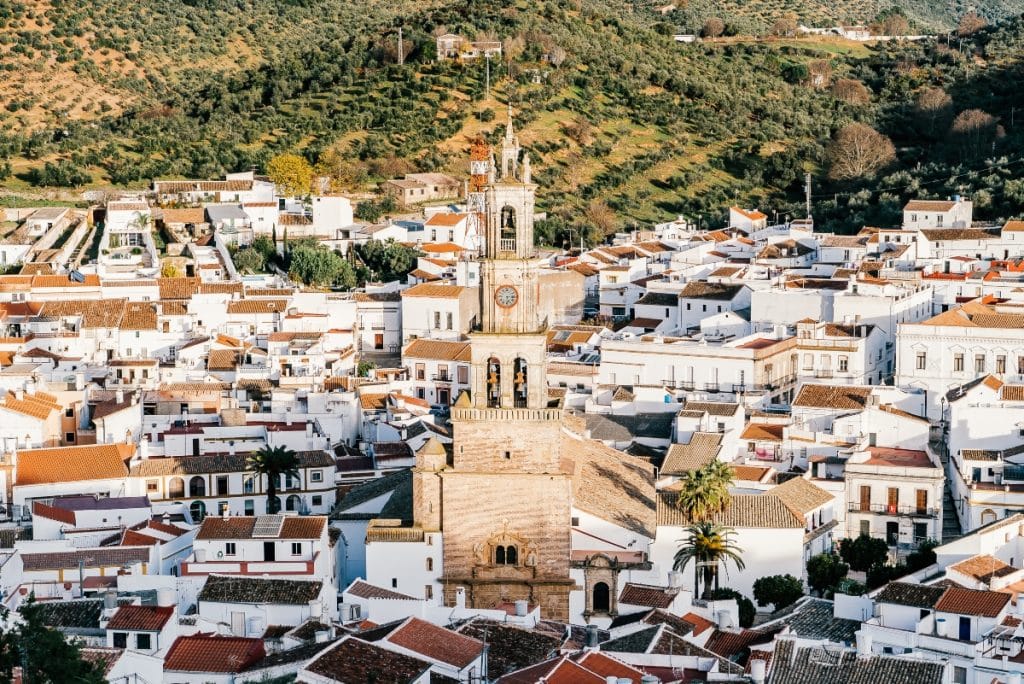
- Seville’s Sierra Morena is, without a doubt, the crown jewel. As part of the world’s largest Starlight Reserve, towns such as Almadén de la Plata, Constantina, El Pedroso, and Las Navas de la Concepción will offer unobstructed views, free from light pollution and with perfect horizons.
- Highvantage points in the Aljarafe: those elevated spots facing directly west are excellent urban alternatives for those who don’t want to venture far from the capital.
- Metropolitan parks with open spaces: If you’re staying in the city, look for spacious areas like Alamillo Park, positioning yourself in spots free of tall trees that might block the western sky.
Safety tips: how to watch it safely
Looking directly at the Sun—even if it is 94% covered—can cause irreparable damage to the retina or permanent blindness without you feeling any pain at the time.
- Use approved eclipse glasses: only those certified to ISO 12312-2 are valid.
- Check the filter. Before the big day, test your eclipse glasses in front of a light bulb at home. If they have scratches, holes, or creases, discard them immediately.
- Avoid home remedies. Neither X-rays, nor regular sunglasses (no matter how dark they are), nor tinted lenses will protect your eyes. Also, do not use cameras, telescopes, or binoculars without a proper solar filter attached to the front lens.