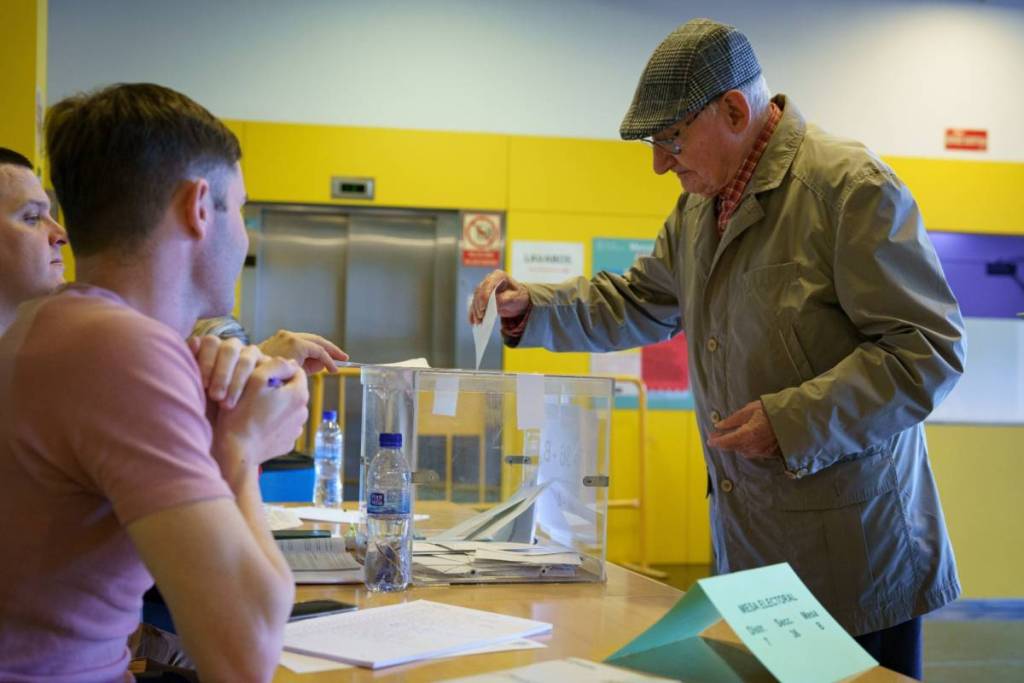

There are just a few weeks left until the General Elections on November 29, which will bring thousands of citizens across Spain to the polls. Exercising the right to vote, however, is not the only call to action for November 29; there is also the task of staffing the polling stations.
In Seville, the City Council has already conducted a computerized random selection during an extraordinary plenary session to choose the 10,956 people (including chairpersons, members, and alternates) responsible for staffing the 913 polling stations distributed across the city’s 203 polling centers.
How to check if you’ve been assigned to a polling station in Seville
Any citizen under the age of 70 who is registered on the voter rolls and can read and write may be selected to serve at a polling station in Seville. Before discussing the legal grounds for an exemption, here’s how voters are notified if they’ve been selected as a member or chairperson of a polling station.
The standard appointment procedure follows specific steps:
- Notification in hand. The legally binding method is delivery by certified mail to your registered address. Mail carriers or local police officers will attempt to deliver the notice in person; if you are not home, they will leave a notice in your mailbox instructing you to pick it up at the corresponding post office.
- Online municipal inquiry. The Seville City Council has made its electronic portal available for checking the voter registry and polling station assignments. You can log in using a digital certificate, electronic ID, or the Cl@ve system to check your status without waiting for the letter.
- Office of Statistics and Citizen Services (010). You can verify whether your name appears on the official list of the random selection by calling the municipal hotline or visiting your local district office.
Legal grounds for being excused from serving at a polling station
Being assigned to a polling station is a mandatory civic duty. In fact, you have 7 days from the date you receive the notification at your home address to file an objection. You can do so in person or through the online platform provided by the JEC. The JEC has 5 days to rule on the request.
However, the Central Electoral Board (JEC) provides for a series of specific exemptions that exempt individuals from this duty if they are properly submitted and justified:
Personal grounds for direct exemption (substantiated)
- Is over 65 years old (the law allows for voluntary opt-out between the ages of 65 and 70).
- Health and dependency: being in a state of temporary incapacity (medical leave), permanent total disability, severe disability, or having a recognized disability.
- Pregnancy and parenthood. Pregnancy starting in the sixth month or maternity/paternity leave, as well as the breastfeeding period up to 9 months.
- Have served on a polling station at least three times in the last 10 years.
- Is incarcerated in a correctional facility or psychiatric institution.
Family and Caregiving Reasons
- Direct and continuous care of children under 8 years of age (or under 12 if sole custody is proven) or of relatives up to the second degree who, due to age, accident, or illness, cannot care for themselves.
- Previously scheduled family events of special significance (weddings, baptisms, First Communions), provided that the person concerned is the main participant or a relative up to the second degree of kinship and that cancellation would result in irreparable financial harm.
Professional reasons
- Those who are required to perform duties that day at election boards, courts, or public agencies involved in the elections.
- Workers in essential, non-postponable services (on-call healthcare personnel, firefighters, law enforcement officers).
- Media directors and news editors who are required to cover Election Day.